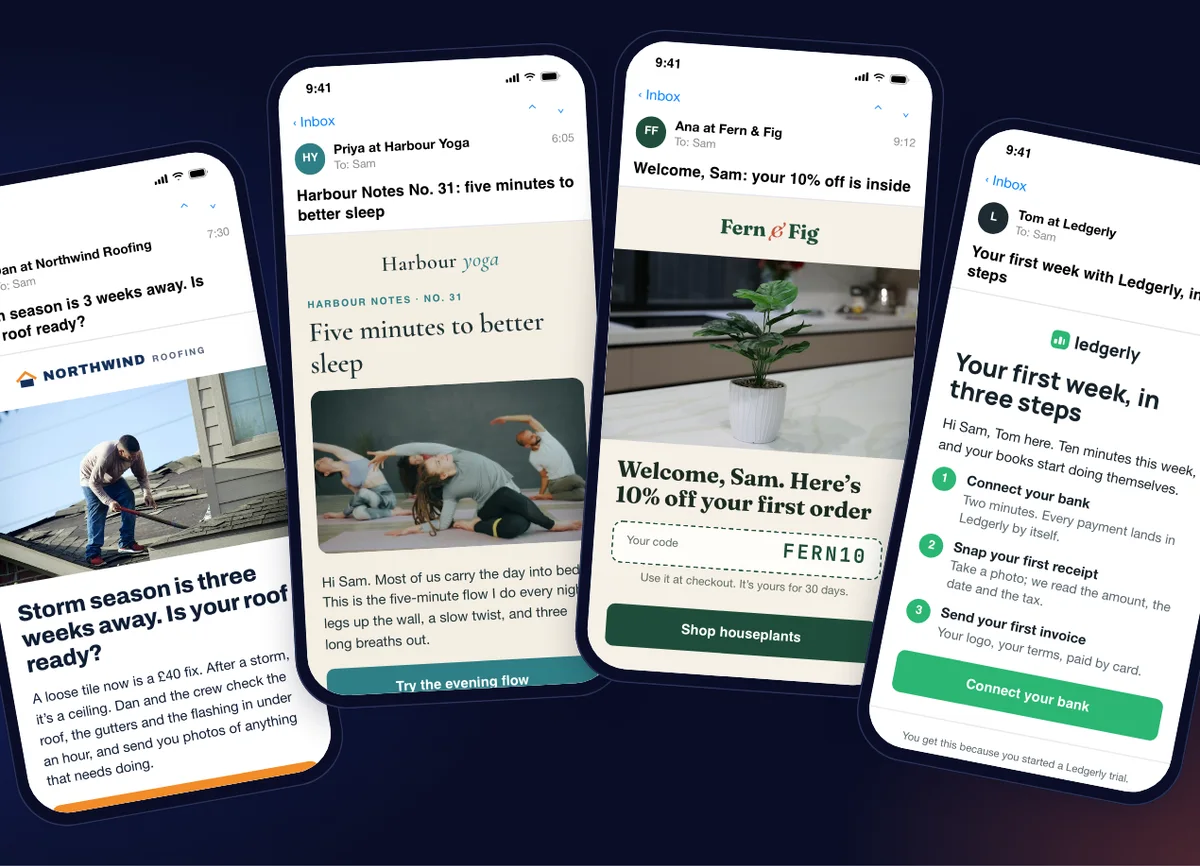
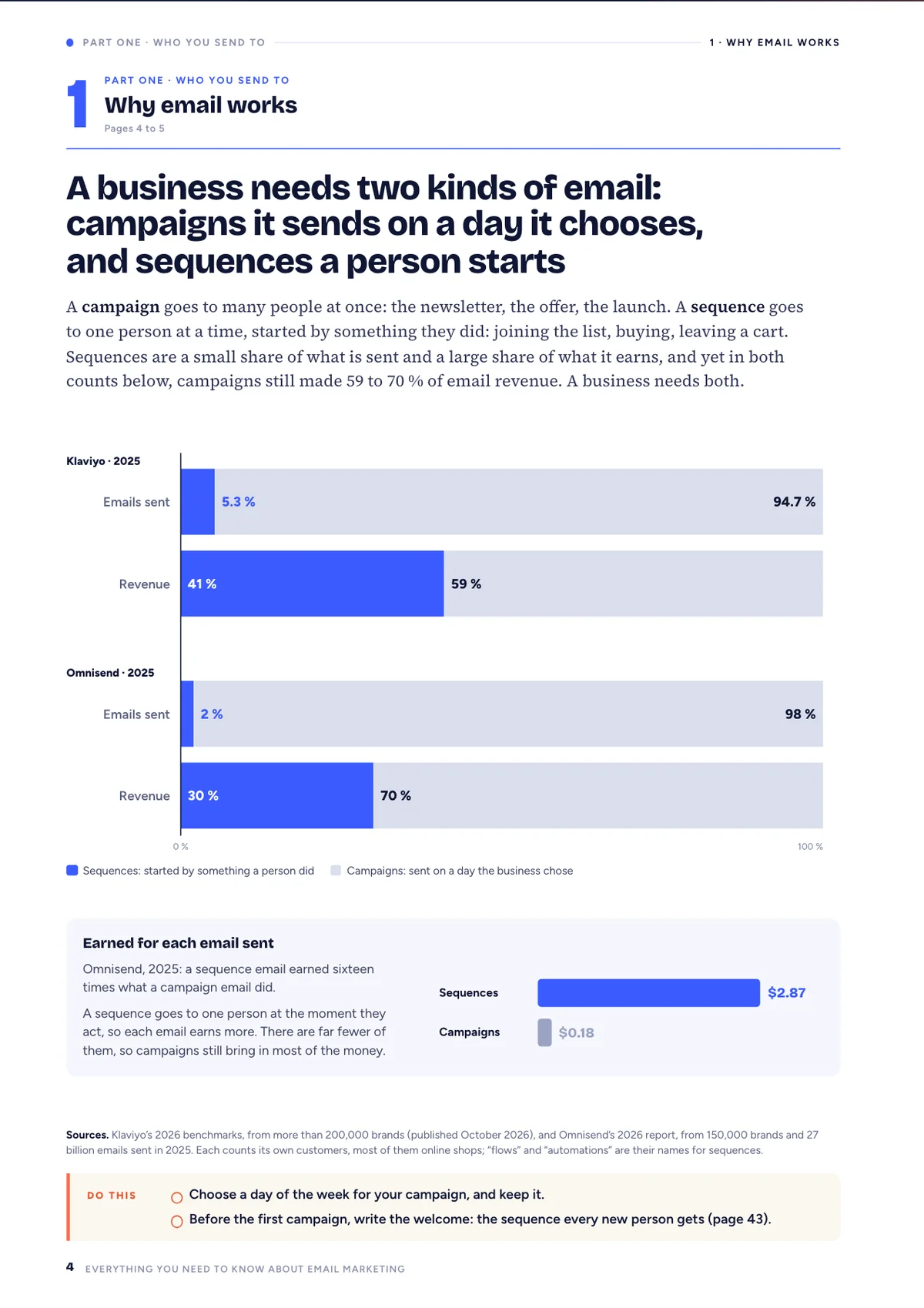
How Ana stopped guessing at her email.
Ana runs Fern & Fig, a small online plant shop, and writes its email herself. She is one of the four business owners whose emails fill the guide. This is the order she worked in.
Ana had about 1,900 people on her list and no plan for them. She emailed when there was a sale. In a quiet month she sent nothing at all, and when she did send, more people left than she expected. She could not tell whether any of it sold a plant.
She started where the guide starts, with who she was sending to. Everyone on her list had asked to be there, at her checkout or through the sign-up box on her site, so the list itself was sound (page 6). The trouble came after they joined. Nobody heard from her until the next sale, sometimes two months later, and by then many had forgotten who she was.
So the first thing she wrote was not a campaign.
The email that goes first
It was a welcome. Page 43 shows how to build one: the 10 % off her sign-up box had promised, as the headline and the first button. Then who she is, what arrives every Thursday, and one question: indoor plants, garden, or both? Each answer is its own link, so what follows can fit what each person grows.
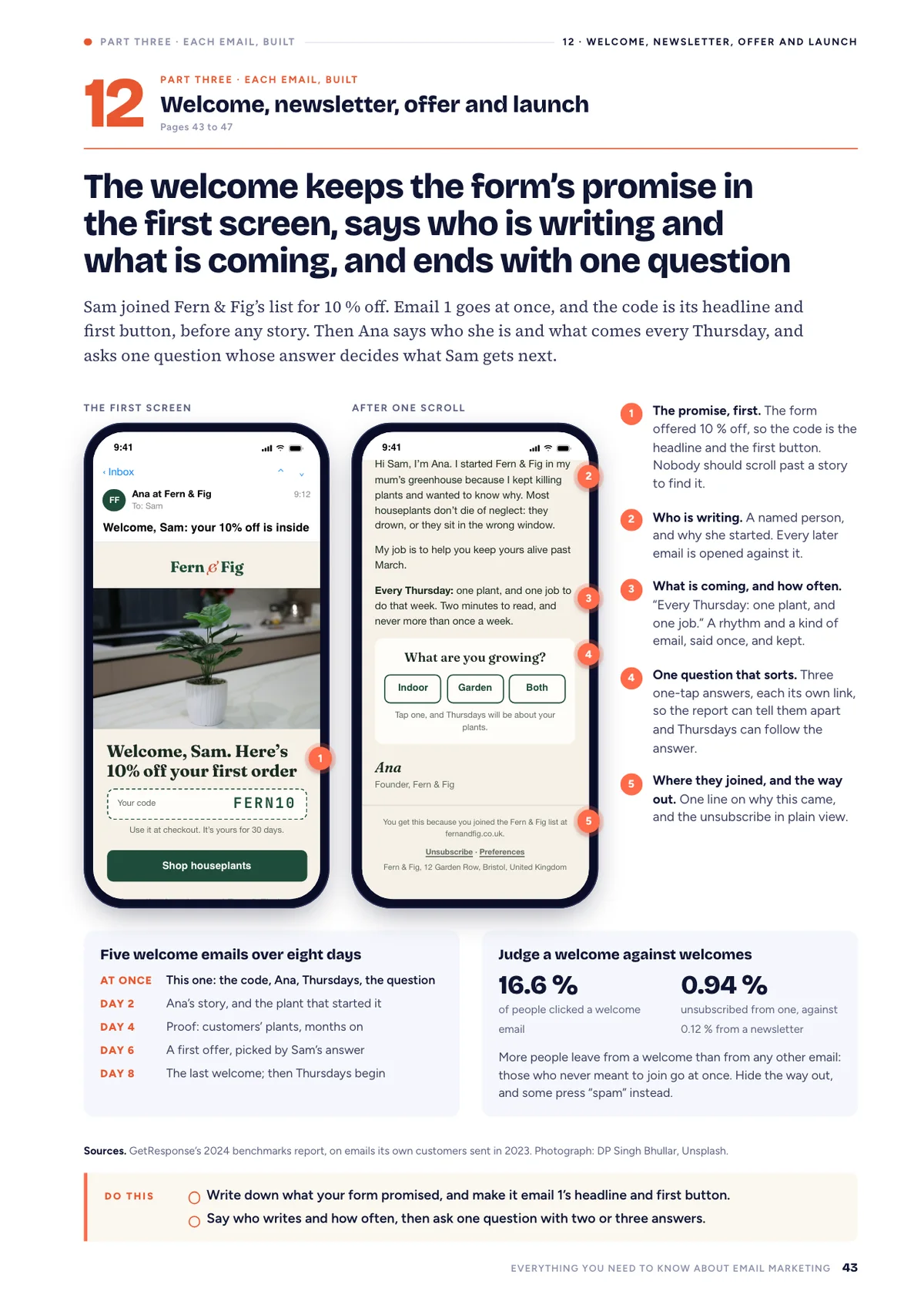
Her welcome now reaches every new subscriber the minute they join, and it sells more than any other email she sends.
That left the question she had always guessed at: how often to send.
A day she keeps
Page 14 answers it. More email brings more clicks in total and costs a few more subscribers in total, and sending too little costs more than sending too much. Weekly by default, never less than monthly. Ana chose Thursday and kept it: one plant and one job for the week, two minutes to read. Because people knew what was coming and when, fewer of them left.
Then she needed to know whether any of it was working.
Numbers she can act on
She had been judging her email by opens. Page 62 explains why an open stopped proving anything in 2021, when Apple’s Mail began opening email in the background. Page 65 gives five numbers to keep instead, each on its own weekly graph. Now she can see which Thursdays sold plants and which only looked busy.
None of it needed a course or a consultant. It needed the right page at the right time, and the guide is 78 of them.