Launching a cold email campaign from a fresh domain without a proper warmup strategy is the fastest way to destroy your agency's sender reputation before you even get started. Major mailbox providers treat zero-history domains with immediate suspicion, routing sudden spikes of commercial mail directly to the junk folder. If you attempt to launch full client lists on day one, algorithms flag your account as a high-risk security threat, burning through expensive domains and stalling client campaigns indefinitely.
Managing volume ramp-up schedules manually across dozens of client accounts quickly turns into an operational nightmare. Account managers end up spending hours calculating spreadsheet schedules, manually tweaking daily send limits, and logging into separate dashboards just to push out a few dozen emails at a time. A single miscalculated batch or forgotten cap can trigger blocklists, invalidating weeks of effort and damaging client trust.
Relying on automated warmup for new sending domains solves this operational bottleneck by placing daily dispatch pacing directly into the infrastructure layer. By establishing predictable volume curves, enforcing strict list hygiene, and isolating campaign loads, agencies build high sender reputation without burning billable hours on tedious manual administration.
Fresh sending domains trigger immediate defensive throttling from major email providers
When you register a brand new domain and immediately point it at standard cloud infrastructure, spam filtering algorithms view that address as a blank slate with zero credit history. To protection engines at major mailbox providers, an unheated domain looks identical to a rogue setup configured by a malicious actor trying to blast phishing campaigns before the domain gets blacklisted. Because internet service providers cannot evaluate past engagement patterns, authentic user interactions, or historic complaint ratios, their default defensive posture is defensive throttling.
This defensive throttling manifests in three distinct ways. First, recipient servers strictly limit the total number of connections your sending infrastructure can open per hour. Second, incoming messages undergo heavy temporary deferrals, returning soft bounce codes that force your platform to retry delivery later. Third, any messages that do manage to clear the gateway are routinely deposited directly into the spam folder rather than the main inbox. This isn't a glitch; it is an intentional automated defense designed to limit potential damage from unverified sources.
Understanding why do my emails go to spam when I send from a brand new domain comes down to how provider algorithms score risk. Spam filters calculate a real-time reputation metric based on factors like authentication records, domain age, sending consistency, and subscriber reactions. When a brand new address attempts to dispatch hundreds of identical messages, the total lack of historical baseline creates an immediate statistical anomaly. Without historical proof of positive engagement, high sending velocity guarantees defensive filtering.
Technical configuration alone cannot bypass this initial scrutiny. Even if your technical team configures Sender Policy Framework, DomainKeys Identified Mail, and Domain-based Message Authentication, Reporting, and Conformance records perfectly, authentication only proves who sent the message; it does not prove the sender is trustworthy. Establishing domain trust requires a sustained period of gradual, positive interactions that demonstrate legitimate commercial behavior over time.
Manual volume ramp-ups consume agency hours and introduce fatal human error
To navigate provider throttling, many agencies attempt to manage domain ramp-ups by hand. Operationally, this requires setting up complex spreadsheets, tracking send caps per account across multiple calendar weeks, and relying on individual staff members to update daily sending limits manually. In a fast-paced agency environment managing ten, twenty, or fifty client accounts, this manual approach breaks down quickly and creates massive administrative overhead.
The operational traps of attempting manual volume escalation schedules for agency clients are everywhere. A missed spreadsheet update can cause an employee to send a full client list of 5,000 leads on day three instead of day twenty-three, immediately triggering provider spam traps and burning the client domain. Furthermore, staff members rarely account for the subtle differences between target email providers. Pacing a schedule manually for a mixed audience of Google Workspace, Microsoft 365, and regional ISP mailboxes requires custom math that human operators simply cannot maintain accurately at scale.
Manual volume management also wastes valuable agency capacity that should be spent on client strategy and creative production. Instead of focusing on high-margin advisory work, account managers waste billable hours checking queue logs, adjusting daily limits, and moving contacts across different segments to artificially suppress volume. When you evaluate self hosted mail servers vs third party delivery platforms for agencies, the hidden cost of manual deliverability management quickly outweighs any perceived infrastructure savings.
- Inconsistent daily dispatch volumes that trigger provider algorithm flags.
- Accidental list oversights leading to massive volume spikes that ruin domain trust.
- Inability to adjust dispatch rates dynamically based on real-time bounce rates.
- Hours of wasted account manager time spent tweaking CSV files and send caps manually.
Automated warmup for new sending domains builds algorithmic trust through predictable volume curves
Implementing automated warmup for new sending domains takes the guesswork and operational friction out of building sender reputation. Rather than relying on human intervention, platform-level automation governs daily dispatch speeds per domain and provider automatically. By controlling the precise cadence and volume of outbound messages, automated systems construct a linear progression curve that satisfies the strict mathematical models used by security algorithms.
Automated domain warmup establishes a mathematical foundation of trust by systematically executing specific, controlled actions during the initial setup window:
- Initiating dispatch at tiny volumes, often starting at fewer than 20 messages per day per target provider.
- Scaling output incrementally according to predefined mathematical throttling curves based on real-time delivery telemetry.
- Distributing dispatch evenly across 24-hour cycles to avoid sudden burst patterns that look like automated spam attacks.
- Monitoring real-time response codes from receiving servers to pause or adjust acceleration schedules instantly if soft bounces occur.
A common question agency teams ask is: how long does automated domain warmup take before sending full campaigns? For a completely fresh domain, standard automated schedules generally run between two and four weeks to establish a resilient reputation base. During the first week, daily volume increases conservatively to allow mailbox providers to index the authentication records and observe zero abuse reports. By week three, daily sending limits expand exponentially while maintaining healthy inbox placement metrics.
It is critical to distinguish IP warmup from domain warmup. IP warmup involves pacing volume over dedicated physical internet protocol addresses, which is essential for massive enterprise senders operating their own data center hardware. Domain warmup, by contrast, establishes reputation specifically for your brand identifier and cryptographic signing domains across shared or pool infrastructure. Modern inbox providers evaluate domain reputation far more strictly than shared IP pool reputation, making automated domain-level pacing the primary lever for securing long-term inbox placement.

Agency operations run significantly smoother when domain warmup happens automatically behind the scenes as part of client onboarding. Instead of forcing clients to wait weeks before seeing progress or making them handle complex warmup routines themselves, automated platform infrastructure allows you to establish backend deliverability quietly. Agencies can showcase campaign assets early by mastering how to pitch finished email campaign designs on initial client calls, knowing the delivery pipeline will automatically handle domain heating before full deployment.
Domain-level warmup must pair with automated list hygiene to preserve early IP signals
Automated volume pacing alone cannot protect a new domain if you are sending messages to invalid, dead, or unverified contact data. During the initial warmup window, provider algorithms evaluate hard bounce rates and spam trap hits with zero tolerance. A single high-volume bounce event during week one can completely wipe out the progress of an automated warmup schedule, forcing your domain into defensive throttling loops that take weeks to resolve.
This risk highlights why list suppression and verification must happen prior to sending during the warmup period. Importing unchecked legacy databases, scraped contacts, or old client lists directly into a warming domain introduces toxic elements such as honeypots and spam traps. Automated verification software strips out invalid addresses, role-based mailboxes, and known complaint risks before your warming domain ever attempts to initiate an SMTP connection.
Agencies evaluating list cleaning routines often question the overall return on investment of pre-send filtering. Reviewing whether Is Automated Email List Cleaning Worth It for B2B Agencies confirms that pre-send verification is critical infrastructure. Stripping bad data before dispatch preserves the delicate positive signals generated during automated warmup, ensuring every message sent contributes directly to building high domain authority.
Many marketers wonder: can automated warmup fix an existing domain with bad deliverability? The short answer is that while automated warmup rehabilitates a damaged domain, it cannot overcome ongoing list hygiene failures. If a domain has a history of high complaint rates, automated volume pacing will only delay the inevitable spam placement unless underlying data quality issues are fixed first. True deliverability recovery requires pairing automated address suppression with clean volume escalation curves to systematically rebuild algorithmic trust over time.
Isolating new accounts on secondary domains prevents main infrastructure contamination
Pointing high-volume outbound campaigns directly at a client's primary corporate domain is a recipe for operational disaster. If an unheated domain runs into aggressive spam filtering or lands on a major blocklist during initial campaign execution, the damage extends far beyond cold outreach performance. Internal employee communication stalls, transactional invoices bounce, and day-to-day sales calls get routed to recipient junk folders. Isolating new accounts on dedicated infrastructure is not optional for agencies; it is the fundamental boundary that keeps corporate assets safe.
Establishing branded secondary sending domains creates a complete firewall around the primary domain. By registering alternate domain variations that match the core brand identity, agencies can run outbound campaigns and conduct domain heating routines without exposing the client's principal infrastructure to deliverability risks. Understanding why secondary domains are essential for high volume email marketing allows your team to explain the architectural necessity to clients during onboarding, reframing the setup as a critical risk-management standard.
The primary drawback to secondary domain architecture is the administrative friction of managing multiple domain profiles. Registering five to ten alternate domains per client, configuring custom DNS records, setting up SSL certificates, and organizing inbox routes across separate dashboards manually requires significant maintenance. If an account manager forgets to configure SPF or DKIM on a secondary domain, receiving mail servers will reject the traffic regardless of how slowly the domain is warmed.
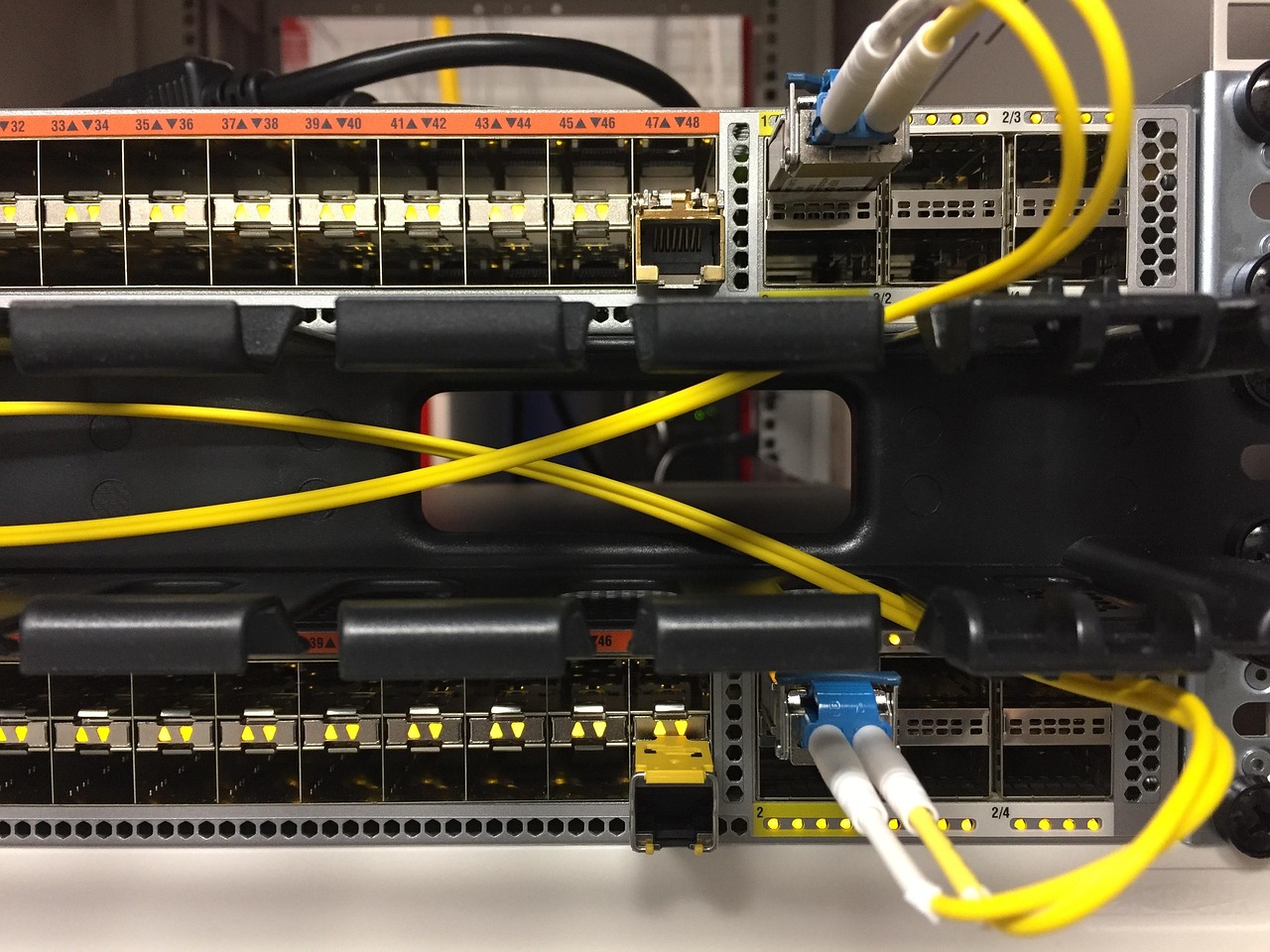
Modern white-label platforms eliminate this administrative burden by handling domain provisioning, cryptographic record verification, and initial warmup pacing at the system level. By automating the technical setup of secondary infrastructure, agencies can deploy fresh sending identities instantly while preserving absolute separation between campaign dispatch and corporate operations.
Spreading load across multiple brand domains accelerates ramp times for large lists
Relying on a single sending domain to push thousands of marketing messages creates an immediate deliverability bottleneck. Even after completing a standard four-week automated warmup schedule, a single domain carries physical volume limits per provider. Pushing beyond those threshold caps introduces delivery latency, connection timeouts, and temporary deferrals from receiving security gateways. To scale total outbound output rapidly without triggering provider throttling, agencies must distribute campaign volume across a matrix of brand-matched sending identities.
Multi-domain distribution works by splitting a single large list into parallel micro-campaigns. Instead of attempting to dispatch 10,000 messages per day through one address, an automated engine distributes that volume evenly across five distinct domains, sending just 2,000 messages per domain. This strategy keeps daily dispatch speeds comfortably under provider radar thresholds while achieving the total target volume for the client.
Implementing load distribution effectively requires coordinating several backend mechanisms across your sending stack:
- Mapping custom brand-matched secondary domains to ensure recipient trust remains consistent across all outbound messages.
- Staggering dispatch timing so that individual domain queues do not open simultaneous connections to the same recipient server.
- Synchronizing platform-wide suppression lists so that unsubscriptions and bounces on one domain automatically protect the remaining sending identities.
- Aggregating real-time campaign performance so the client views unified campaign metrics rather than fragmented reports.
Mastering how multi domain campaign volume distribution protects client deliverability transforms how your agency scales large accounts. However, agencies must recognise the operational trade-offs involved. Running multi-domain campaigns means managing multiple inbox monitoring streams and handling reply routing carefully. Without automated inbox aggregation, tracking customer responses across ten distinct domains quickly becomes messy for account teams.
Automated campaign infrastructure handles multi-domain routing behind the scenes. By distributing volume across brand-matched domains dynamically, the platform keeps send rates within optimal warmup boundaries while consolidating customer replies, opens, and link tracking into a single agency workspace.
Infrastructure automation turns deliverability management into a quiet agency recurring revenue stream
Most small business clients do not understand the technical mechanics of sender reputation, SPF record alignment, or automated domain warmup routines. They simply want their campaigns to land in target inboxes and drive measurable business results. For marketing agencies, this gap between technical complexity and client expectations represents a major commercial opportunity. When you package automated deliverability management directly into your core retainers, technical operations become a high-margin recurring service.
Instead of billing strictly for manual strategy consulting or graphic design hours, agencies can charge clients for access to fully managed, enterprise-grade sending infrastructure. You set your own client subscription prices, bundle deliverability guarantees alongside campaign execution, and let backend automation run the technical operations. Learning how retainer agencies turn strategy consulting into recurring software revenue shows how shifting from manual service delivery to platform-led operations creates predictable monthly cash flow.
This operational shift changes agency economics completely. Because backend warmup, list verification, and load balancing occur automatically, your billable staff spending drops significantly per client. Account managers no longer burn hours tweaking sending spreadsheets or managing domain heating manually. They focus on campaign strategy, client retention, and account expansion while the software handles deliverability governance quietly in the background.
To package deliverability management as a branded service effectively, your agency needs standard operational terms. The platform table below outlines how automated deliverability capabilities translate into high-value agency service offerings:
| Infrastructure Capability | Manual Agency Approach | Automated Platform Offering |
|---|---|---|
| Domain Warmup | Manual spreadsheet scheduling and daily cap edits | Automated algorithmic pacing curves per provider |
| List Suppression | Manual CSV filtering before every broadcast | Pre-send address cleaning and platform suppression |
| Load Balancing | Single domain sending prone to volume spikes | Multi-domain campaign volume distribution |
| Deliverability Tracking | Manual log checking across multiple provider tools | Aggregated client portal reporting with real open metrics |
Automate your client deliverability stack and monetize platform infrastructure with SendTo
Protecting client deliverability does not require burning agency hours on manual sending schedules, spreadsheet tracking, or constant domain troubleshooting. Relying on automated warmup for new sending domains builds algorithmic trust with major mailbox providers automatically, ensuring fresh domains establish clean sender reputations without administrative friction.
SendTo provides agencies with a complete, white-label email marketing platform built to run under their own brand. With built-in automated domain warmup, pre-send list verification, AI campaign generation, and multi-domain distribution, SendTo handles backend infrastructure so you can focus on scaling recurring agency revenue. Furthermore, software creators, consultants, and agency advocates can monetize their industry network by recommending SendTo to other growth-focused businesses.
Through the SendTo affiliate programme, partners earn 20% of the partner subscription of every agency they refer, paid monthly via PayPal for as long as the referred agency maintains an active subscription. It is a direct way to build long-term recurring revenue by sharing an enterprise-grade deliverability platform with agencies looking to scale.
Earn 20% recurring monthly commissions by introducing agency owners to SendTo's white-label email infrastructure.
Join the SendTo affiliate programme