The date that decides your pub clients' St Patrick's Day print isn't 17 March. It's Friday 28 February, the day every poster, coaster and table card gets its one written sign-off. Hit it and the job goes to press at standard turnaround, and the pub's offer is on the walls a full week before the holiday. Miss it and you pay express rates for posters that go up the weekend before, when the regulars have already decided where they're spending the bank holiday.
It's Thursday 20 February 2025. Monday 17 March is 25 days away. That's enough time to do st patricks day pub marketing print properly, without rush fees, as long as you plan backwards from install day and order the slowest item first. It isn't enough time to let approvals drift into March.
This guide gives you a dated schedule, the order to commission each piece, the copy rules for drink offers and a way to turn the table cards into email sign-ups the pub keeps using long after the night. It's written for an agency owner or freelancer running this for two or three pubs at once, so every step has one action, one thing to look for and one mistake to avoid.
By Friday 28 February you can have every St Patrick's Day print piece approved and the emails scheduled
Here's where you'll be in eight days. Every print piece for each pub is signed off in writing. The print order sits with the printer at their normal turnaround, so the invoice carries no express surcharge. Three emails are built and scheduled to land alongside the print, and the table cards carry a QR code that adds drinkers to the pub's own list.
None of that takes long once you have the inputs. What eats the time is chasing them one by one. Gather these before you open a design file, and ask for them in a single message to each landlord today.
- The offer and opening hours for Monday 17 March, plus anything on over the weekend before, such as live music or the rugby on screen
- Logo files, ideally vector (SVG, EPS or PDF), and the pub's colours if they have them
- The number of tables, and roughly how many beer mats the pub gets through on a busy weekend
- The name of the one person who signs off the artwork, and their email address
- Your printer's stated working days for posters, table tents and coasters, plus their cut-off time for files
- Whether the pub already has an email list, and how those people gave consent
Step 1: Fix the install date first, because every other deadline counts back from it
Start at the end. Agree with each pub that the print goes up between Friday 7 and Monday 10 March. That puts the offer in front of drinkers for a full week of footfall, including the weekend before the holiday, which is when people make their plans.
The calendar makes this weekend matter more than usual. 17 March 2025 falls on a Monday, and it's a bank holiday in Northern Ireland and the Republic of Ireland. The final round of the Six Nations is on Saturday 15 March. For a lot of pubs that's a long weekend running from Saturday's rugby through to Monday night, and the posters need to be up well before anyone books a table for it.
What you should see: a short dated schedule, agreed by email with each landlord, showing the install date and the sign-off date. One line each is enough. The mistake: picking the weekend of 14 to 16 March for install because it feels close to the day. By then the poster is telling regulars about plans they've already made.
The backwards schedule at a glance
Every date below counts back from install. Swap in your own printer's stated working days, because turnaround varies by product and by printer, and a coaster run often takes longer than the posters.
| Date | What happens | Who owns it |
|---|---|---|
| Mon 24 Feb | Copy and offer agreed for every piece | You and the landlord |
| Wed 26 Feb | All proofs sent as one PDF | You |
| Fri 28 Feb | Written sign-off on every piece | The named approver |
| Mon 3 Mar | Print-ready files with the printer | You |
| Wed 5 to Thu 6 Mar | Delivery to the pub or to you | Printer |
| Fri 7 to Mon 10 Mar | Install, photograph and check | You or the pub, agreed in advance |
Step 2: Order the coasters first, because they take the longest
Coasters are the slow item. Posters and table tents are digital print jobs that printers turn round quickly. Beer mats are printed on thick absorbent board, often in larger runs, and cut to shape, so they sit in a different queue. Custom shapes need a cutting forme made. Special board weights take time to source. Full-colour printing on both sides adds a pass and drying time. Each of those usually adds working days.
So the action this week is simple. Commit to a quantity and a stock shape, round or square, and book the printer's slot now, even before the artwork is final. Work out quantity from what the pub already uses. A pub that gets through a few boxes on a normal busy weekend needs more than that for a long bank holiday weekend, because wet mats get binned after every round.
What you should see: written confirmation of the printer's slot and the latest date they'll accept artwork for it. The mistake: sending the coaster artwork at the end, in the same batch as the posters. That's how rush fees happen. The posters make their date and the coasters miss it, or you pay to jump the queue.
Stock design with an overprint, or a fully custom run
You have two honest options here. A stock seasonal mat with a sticker or a simple one-colour overprint of the pub's name is quicker and cheaper, and it's ready in time. It also looks like every other pub on the street. A fully custom two-sided run carries the pub's offer and the QR code, looks like the pub's own, and gets kept as a souvenir now and again. It needs the slot booked this week.
Step 3: Write one offer and one line of copy that works on every piece
Write the coaster first. If the copy fits on a 90mm mat and reads from arm's length, it'll work on a poster. You need four things, and only four. A headline, such as the pub's name and "St Patrick's Day, Monday 17 March". One offer, such as live music from 7pm or a food deal. One date and time line. One call to action, such as "Scan to book your table".
Sizes are straightforward. A2 posters work for windows and the main wall, and A3 suits toilets, corridors and the back bar. Table tents work at A6 on small tables and A5 where there's room. Beer mats are usually round or square at roughly 90 to 95mm. Keep the same layout across all of them so the pub's offer is recognisable from the door to the table.
Drink promotions need care. Keep the copy away from anything that encourages heavy or fast drinking, such as unlimited drinks for a fixed price, "drink as much as you can" or speed challenges. Don't suggest that alcohol brings social or sexual success, and keep the design away from anything that appeals to under-18s. Add a short responsible-drinking line. Rules on drink offers differ between England, Scotland, Wales, Northern Ireland and the Republic, and some are tighter than others, so check the pub's licence conditions and the local rules for where it trades before you print a price. Leading with food, music or the atmosphere instead of a cheap pint keeps you on safer ground everywhere.
The same goes for the rugby. You can say the pub is showing the games, but leave out tournament logos and official marks. It's the approach you'd use to promote a big sporting event without using its trademark, and it works just as well for the Six Nations weekend.
What you should see: one agreed block of copy, under about 25 words, that you paste into every piece. The mistake: writing different copy for the poster, the tent and the mat. Every version is another thing to proof and another place for a wrong date to slip through.
Step 4: Get proof sign-off by Friday 28 February, because that date decides the St Patrick's Day pub marketing print budget
Install is fixed. That means any day lost at approval comes straight out of production time. If proofs slip into March, your printer has fewer working days to print, finish and deliver, and a compressed turnaround is exactly what express rates charge for. Sign-off on Friday 28 February keeps every piece inside standard turnaround. Sign-off on Wednesday 5 March doesn't.
Send every proof for a pub as one PDF on Wednesday 26 February. Poster, table tent and both sides of the coaster, on numbered pages. Send it to the one named approver, and say plainly that there's one round of changes, due back by Friday.
What you should see: a written yes in an email reply, covering spelling, the date and day, the times, any prices on the offer, the QR code scanning to the right page and the bleed on every piece. Ask the approver to confirm each of those by name, not just reply "looks good". The mistake: approving pieces one at a time, which turns one round into four, or letting the landlord pass the proofs round the staff WhatsApp group. Ten people suggest ten changes, nobody owns the final version, and Friday becomes the following Wednesday.
Step 5: Put a QR code on the table cards that adds drinkers to the pub's email list
A table card sits in front of the same group for an hour or more. That's a long time to look at one offer, and a QR code turns it into a sign-up the pub keeps. Point the code at a hosted SendTo landing page, not the pub's homepage or its social profile. The page carries the same headline as the poster, one reason to sign up and a short form asking for a first name, an email address and consent.
The reason to scan matters more than the code itself. Two work well in pubs. One is a table booking for Saturday 15 March, when the rugby and the long weekend fill the room. The other is a voucher for the following month, sent by email, which gives the drinker a reason to come back in April. If the voucher is for a drink, keep it to a single item and run the wording past the same licensing checks as the posters. A food voucher avoids the question altogether.
Our signup forms are protected against bots, so the list fills with drinkers and not scripts. Double opt-in is optional, and we'd switch it on here. People type email addresses on a phone in a dim bar after a pint, and a confirmation email weeds out the typos before they cost the pub sending reputation. Add a GDPR consent line that says what they'll get and how often, such as "Offers and events from the pub, about twice a month", with an unticked box. For more on what these pages can and can't do, see our review of hosted campaign pages. The same thinking runs through our guide to turning a booth into an email list, only with a pint in hand instead of a lanyard.
What you should see: a test scan from at least one iPhone and one Android phone, under the pub's own lighting, opening the page in a few seconds. Your test sign-up shows up in the pub's list and the confirmation email arrives. The mistake: printing the QR too small or under a glossy laminate that reflects the lights. Keep it at least 25mm across on a table tent, with a clear white margin around it.
Step 6: Schedule three emails that line up with the print dates
Three emails, each tied to a print date. The announcement goes on Monday 3 March, the day the files reach the printer, so the pub's list hears about the offer before the posters go up. The reminder goes on Thursday 13 March, before the long weekend starts. A short email goes on the morning of Monday 17 March with the opening hours and the booking link.
Build the emails from the same copy block as the posters
Paste the agreed 25-word copy block from Step 3 into a campaign brief. SendTo designs the HTML email from that brief and the pub's brand preset in seconds, using the same logo and colours as the print. So the email looks like the poster on the wall. If the first design isn't right, one-click remix gives you another version without rewriting the brief. For three pubs, that's nine emails built in an afternoon, not three days.
Before anything is scheduled, our built-in reviewer checks each campaign's subject line, structure, language, links, alignment and basic compliance. It catches a broken booking link or a subject line that reads like spam. It doesn't know the pub's licence conditions or the local rules on drink offers, so the wording checks from Step 3 stay with you.
Send the reminder to segments, not the whole list
By 13 March you know who did what with the announcement. Build one segment from people who clicked and send them a short nudge to book Saturday. Build another from non-openers and send them the announcement again with a new subject line. People who opened but didn't click get a version that leads with the photo from Step 7. Monday's email goes to everyone and stays short.
What you should see: three campaigns scheduled in the calendar for each pub, with the reviewer's checks passed. The mistake: holding the first email back until the weekend before, which repeats the late-poster problem in the inbox.
Step 7: Install, photograph and post the print the week before
Install day is when the plan becomes something drinkers can see. Go to each pub between Friday 7 and Monday 10 March, or send someone you trust, and put every piece up yourself. Posters in the window and on the main wall, A3 in the corridors and toilets, a table card on every table and mats stacked behind the bar.
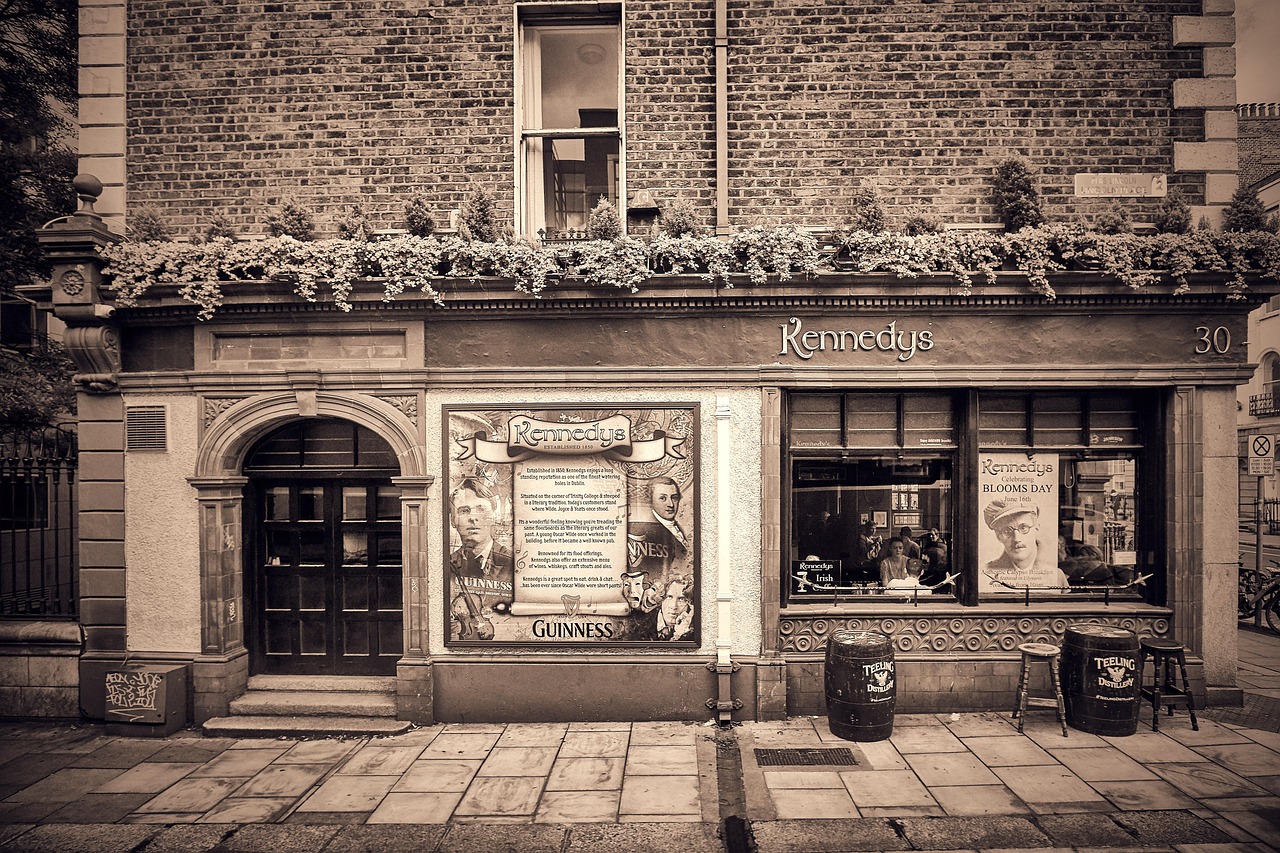
Then photograph everything in place. Send the photos to the landlord the same day, so they can see what went up and where. Reuse the best ones in the pub's social posts that week and in the 13 March reminder email. A real photo of the pub's own window beats a stock image every time.
What you should see: every piece up and visible, with no leftover Valentine's posters or earlier Six Nations stock covering the new print. The mistake: dropping a box at the bar and assuming the staff will put it all out on a busy Friday night. They won't, and you'll find the box under the till on 18 March.
How to tell the schedule worked, and what to do if a date slips
Five checks tell you whether this ran the way it should. Run them for each pub and keep the answers, because they're the case you'll make next year.
- Written sign-off arrived by Friday 28 February
- The printer's invoice shows standard turnaround with no express surcharge
- Every piece was installed and photographed by Monday 10 March
- QR sign-ups are counted, from install day to the end of March
- The client report shows real human opens and clicks for all three emails
That last check matters more than it looks. Security scanners at some mailbox providers open emails automatically, which inflates open rates. SendTo's reports exclude those scanner opens, so the numbers in the client portal reflect people. Bookings from the landing page sit in the same report, which gives you something concrete to show the landlord.
If sign-off slips past 28 February, cut scope in this order
- Drop the custom coasters and use stock mats with an overprint, or skip mats entirely
- Print posters and table cards only, which still fit a shorter digital turnaround
- Print table cards and posters in-house on A4 card, and keep the QR code on them
If the printer's delivery slips instead, lead with the email and the landing page. Bring the reminder email forward a day, put the booking link in the pub's social posts and install whatever arrives the moment it lands. The offer still reaches the regulars, and the sign-ups still come in.
Agencies that run this schedule for several pubs have a product they can sell every year
The same backwards schedule works for Easter on Sunday 20 April, for summer sport and for Christmas bookings. Fix the install date, order the slowest item first, get one sign-off and line up the emails with the print. Run it for three pubs and you have a seasonal package you can price once and repeat four times a year.
The email side is what turns those print jobs into monthly work. Every QR sign-up adds to a list the pub owns, and that list needs sending to between the big dates. On SendTo, you run that email under your agency's own brand, at prices you set, with the address checks, domain warmup and sending pace handled for you. Bring the St Patrick's numbers to a Q1 client review meeting and the case for a monthly retainer makes itself. For what the platform costs you as a partner, see the pricing page.
If you write for agency owners rather than run one, this kind of seasonal playbook is exactly what they search for. Our affiliate programme pays you 20% of the partner subscription each agency you refer pays SendTo, every month that agency keeps paying it. It's never a share of what the agency's own clients pay the agency. Attribution lasts 90 days from the first click, the first touch wins, and commission is paid monthly by PayPal.
Refer agencies to SendTo and earn 20% of their partner subscription every month they pay it.
Join the SendTo affiliate programme