
A chamber membership gets one agency a drawer of business cards, and the same membership gets another agency three retainer clients by autumn. The fee is identical. What changes is what each agency does in the room. The agencies that win retainers there teach in public. They prove their value on members' real email before anyone asks for a proposal. Then they follow up with a consented email sequence that keeps going long after the coffee has gone cold.
That's the honest answer to how agencies get clients from networking groups. The room gives you permission to be useful, and the follow-up turns that permission into a monthly invoice. Below are six tactics. Each gets the same treatment, covering what it is, why it earns its place, one concrete detail you can use this month and the trade-off nobody mentions at the breakfast. The sixth, the follow-up sequence, is the one that turns the other five into recurring revenue.
The timing is good. It's the last week of March 2024, and public interest in email marketing peaks in January, November and December and hits its low in June. Spring is when you plant. A florist or a dental practice you meet in April has had months of contact with you by the time their November campaigns turn urgent. You also have the best workshop topic in years sitting in your inbox, because Gmail and Yahoo's bulk sender rules are about to start biting.
Networking groups reward agencies that teach and punish agencies that pitch
Here's the promise. Treat the group as a place to be useful in public, and the members come to you. Use it as a place to hand out cards, and you're paying a membership fee for a stack of cardboard. Everything about how agencies get clients from networking groups follows from that one choice.
A group member is a far warmer lead than a cold prospect, for three plain reasons. You share a membership, so you're already one of them. There's nearly always a referrer in the room, someone who has seen your work and will say so. And you meet again every month, which gives you a dozen chances a year to be helpful without sending a single cold email. A bookkeeper who watches you answer a deliverability question in February is ready to take your call in May.
Now the trap. Plenty of groups have soft or written rules against hard selling, and members spot the person who only comes to collect contacts within about two meetings. The agency that opens every conversation with its services gets politely avoided. The agency that answers a printer's question about why their newsletter goes to the promotions tab gets introduced to three people by the coffee urn.
On the fee question, a paid chamber earns its cost when it promotes events, runs a member newsletter and gives you a workshop slot. Those are the assets the first three tactics below rely on. A free local group is fine for meeting people, but it rarely hands you a platform. If you can only afford one, pay for the one that lets you teach.
Expect it to take time. A networking contact usually turns into a retainer after several meetings, one piece of real help and a proposal they asked for. That's months, not weeks, which is why starting in spring matters.
1. A free workshop on one fixable problem fills your calendar faster than a talk about your agency
The workshop is a 45 to 60 minute practical session, hosted by the chamber, on one problem members can fix that week. Give it a title like "Why your emails land in spam and the three settings that fix it". The talk isn't about your agency. It's about their inbox.
It earns its place because the group promotes it for you. It goes in the events calendar, the member newsletter and the reminder email, so you reach every member without paying for an ad. Attendees also sort themselves by problem. Anyone who gives up a lunchtime to hear about spam folders has a spam folder problem, and that's exactly the client you want.
The March 2024 hook is Gmail and Yahoo's bulk sender rules
Since February, Gmail and Yahoo have asked bulk senders to authenticate their mail with SPF, DKIM and DMARC, to make unsubscribing easy with one-click unsubscribe headers due by June, and to keep spam complaints under 0.3%. Google has said that from April it starts rejecting a share of mail that doesn't comply. That's current news, it affects every member who sends a newsletter, and the fixes fit on three slides. Our guide on meeting the Gmail and Yahoo bulk sender rules before enforcement tightens in April covers the settings in the order you'd teach them.
End the session with a one-page worksheet and a QR code to a hosted signup form for the slides. That form is where tactic six starts.
The trade-off is real. A good workshop takes a day to prepare, some groups won't let you mention your services at all, and a wet Tuesday can leave you with six people. Six is fine. Six people with the same problem is a better pipeline than forty handshakes.
2. A member-only email audit turns a polite handshake into a scheduled call
The audit is an offer open only to members. It's a 20 minute review of their last three campaigns and their signup form, available until a set date, say the end of April. Announce it at the end of your workshop or in the chamber newsletter, and take bookings through a form.
It works because it's specific and has a deadline. "Let's grab a coffee sometime" never happens. "Twenty minutes, your last three emails, before 30 April" goes in a calendar. It also gives you a real look at the prospect's list, results and gaps before you write a word of a proposal. You aren't guessing what a dental practice needs. You've seen it.
What the audit checklist covers
Keep the checklist the same for every member, so twenty minutes stays twenty minutes. Ours covers six things.
- List hygiene, meaning when the list was last cleaned and how many addresses bounce
- Sender authentication, meaning whether SPF, DKIM and DMARC are set up before April's enforcement
- Subject lines, looking at length, clarity and whether they match the email
- Image-only layouts, since a single image with no live text loads blank for some readers and gives spam filters nothing to read
- Signup forms, checking whether they're protected against bots and offer double opt-in
- Open rates, and whether they're inflated by security scanners opening every email automatically
That last point lands every time. A florist who reports a 60% open rate is often counting corporate security scanners that open each email before a human does. Showing them their real human opens is the moment the audit stops feeling like a favour and starts feeling like expertise. If the list hasn't been cleaned in a year, our piece on whether automated list verification is necessary before launching campaigns gives you the plain answer to pass on.
Here's where SendTo does real work in the room. Paste the member's brief and brand colours into the AI campaign designer and you get a redesigned HTML version of their own email in seconds, on the call. Seeing their own campaign rebuilt beats any slide deck, and it's the same move we describe in pitching finished email designs on initial client calls.
The cost is your time. Ten audits is over three hours of calls plus write-ups, and some members will take the summary and do the fixes themselves. That's fine too. They'll remember who found the problem.
3. Sponsoring the chamber's own newsletter buys trust you can measure
Sponsorship means a paid or swapped slot in the group's member email, every month. The bolder version is offering to run the newsletter yourself. Plenty of chambers produce theirs with whoever volunteered last year, and they're glad to hand it over.
It earns its place through repetition. Your name sits in front of every member once a month, which is twelve touches a year you didn't have to arrange. If you run the newsletter, it becomes a live case study of your own work. Every member who opens it sees a clean design, a clear subject line and mail that lands in the inbox. That's a better portfolio than anything on your website.
Send the slot to a landing page, never your homepage
Point the sponsored slot at a dedicated landing page offering one thing, such as the spam-fix worksheet from your workshop. Put a bot-protected signup form on it with double opt-in switched on, so the people who join your list chose to and confirmed it. In SendTo you build that page and form in the same place, and the reports leave out security scanner opens, so you see the real humans who clicked through from the chamber email and signed up. Track clicks from the slot and confirmed signups each month. Those two numbers tell you whether the sponsorship is paying for itself.
The trade-offs are plain. A paid slot costs money every month, and the first two or three issues often produce a handful of signups at best. Running the newsletter is unpaid work that eats a few hours each month, and if an issue goes out late or with a broken link, every member sees it. Take it on only if you'll treat it like a paying client's account.
4. Referral swaps with non-competing members bring you clients who already trust the referrer
A referral swap is a written agreement with a member whose trade sits next to yours, such as a web designer, a bookkeeper, a printer or a commercial photographer. They don't sell email marketing, and you don't sell what they sell. Each of you sends the other the clients who need what the other one does.
It works because these trades meet small businesses right when marketing comes up. Picture a web designer handing over a new site for a dental practice. The client asks how they'll get patients back to it. A bookkeeper sees a florist's quiet February and asks what they're doing about Mother's Day. A printer gets asked for launch flyers. The client who comes to you through one of these people already trusts you, because they trust the person who sent them. You skip the months of proving yourself that a cold lead needs.
Fit the swap on one page and review it every quarter
A handshake deal fades by summer. A single page that both of you sign keeps it alive. Ours covers five things.
- Who refers what, naming the client types and problems that go to each side
- How intros happen, which is a three-way email sent only after the client says yes
- How fast each side replies to an intro, for example within one working day
- Whether any money changes hands, and if it does, that the client is told
- A review date every quarter, to check what moved and decide whether to carry on
So should money change hands? Our view is no, not between local partners. A paid referral fee changes how the referrer talks about you, and some groups' rules ban it outright. Keep it reciprocal. Send good clients both ways and buy the coffee at the review.
Some members, like independent consultants, would rather recommend software than run campaigns themselves. For them there's a cleaner route. Through the SendTo affiliate programme, an affiliate earns 20% of the partner subscription each agency they refer pays SendTo, every month that agency pays it. They never get a share of what that agency's own customers pay the agency. Attribution lasts 90 days from the first click, the first touch wins, and commission is paid monthly by PayPal.
The trade-off is that swaps go lopsided. You send the photographer four clients and get none back. The quarterly review is where you say so, and if nothing changes after two reviews, let the arrangement end quietly. Falling out in the room costs more than one partner ever brings in.
5. A committee seat makes you the person members ask before they ask Google
This means volunteering for the group's marketing, events or membership committee. It's unpaid, it's regular, and it puts you behind the scenes of the thing every member already pays for.
It earns its place in two ways. First, members watch you run something well, month after month, and that counts for more than any claim on a business card. Second, you hear the problems before anyone writes them up in a brief. A committee meeting where the treasurer mentions that half the members ignore the renewal email is a meeting where you learn which businesses struggle to get their emails read.
Pick a committee whose work members can see
Choose one with visible output, like the events calendar or the member newsletter. When the spring programme goes out on time with a clear booking form, people know who did it. Avoid any committee that only meets. Six people reviewing a constitution produce minutes, and nobody reads minutes.
6. A follow-up sequence after every event is where retainers actually get signed
This is a three to five email sequence that starts when someone signs up at your event. They scan a QR code on your last slide, land on a hosted form and opt in themselves. It never starts from a scraped attendee list or a stack of business cards. That's the answer to whether you can add the people you met to your email list. You can add the ones who signed up.
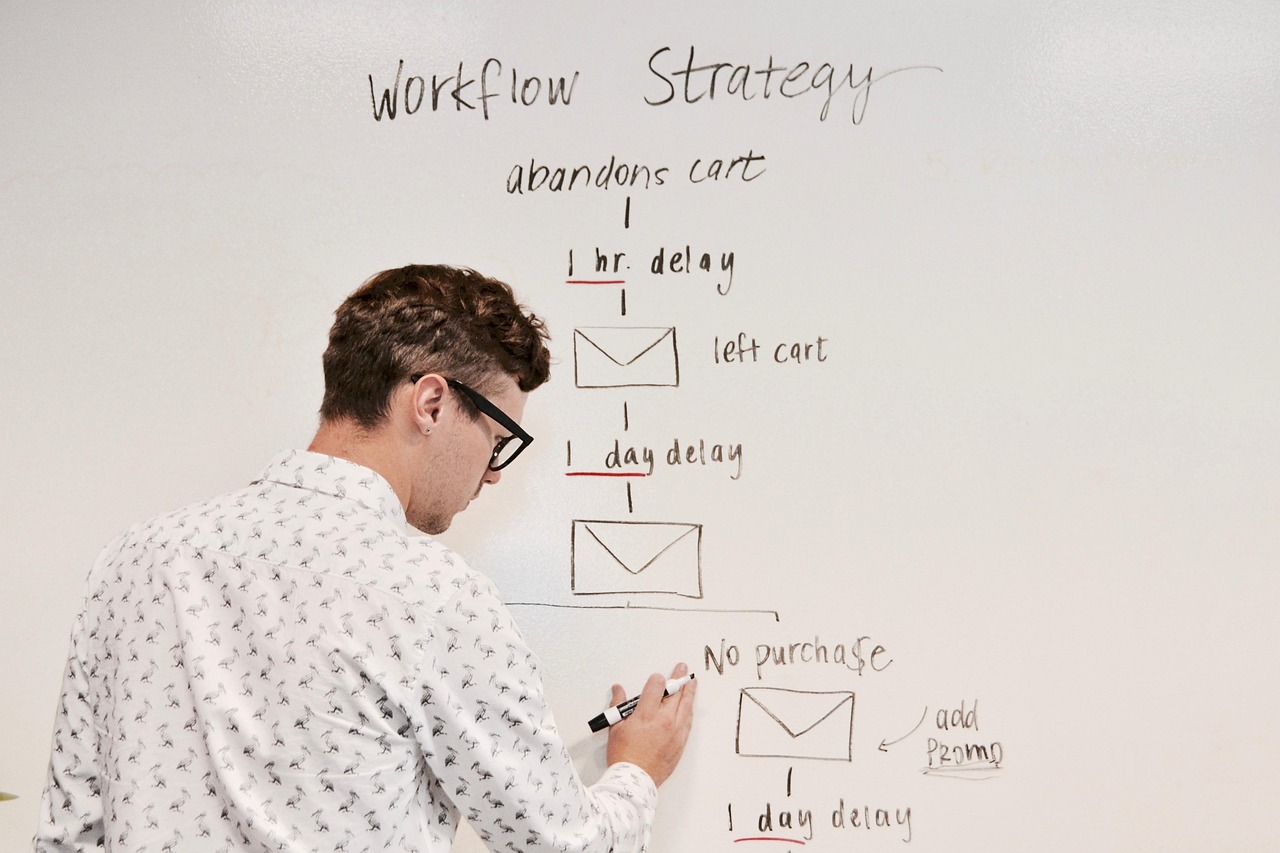
The usual follow-up after a networking event is one email, sent by hand two days later, and then nothing. The member meant to reply and didn't. A sequence keeps going after the coffee goes cold. It hands over the help you promised, shows proof, makes one offer, and then sends different emails depending on what each person did.
Five emails over three weeks, split by behaviour
- Day 0: the slides and the worksheet, sent within the hour while the session is still fresh
- Day 3: a short case example, such as how a bookkeeper set up DMARC before April and stopped landing in spam
- Day 7: the member-only audit offer, with the booking form and the end-of-April deadline
- Day 14: the split, where clickers get a direct invitation to a 20 minute call, unclicked openers get a different resource on the same problem, and non-openers get one resend with a new subject line
- Day 21: one last note to anyone who hasn't booked, then they move to your monthly newsletter
SendTo builds those day 14 segments straight from the earlier campaigns, by clicks, unclicked opens and non-openers. Its reports leave out security scanner opens, so the people sitting in the opened-but-didn't-click segment are humans who read your email. Without that filter, a corporate scanner can push a non-reader into the wrong branch.
How many follow-ups is too many? Five in three weeks, then a monthly newsletter, works without annoying anyone, because every email carries something useful and the split stops non-readers getting the same pitch twice. The call that follows leads to a retainer, and agencies get paid the same way here as anywhere else, with a fixed monthly fee for defined work. Our piece on building a retainer strategy for email marketing clients covers how to scope that proposal.
The trade-off is setup time. Writing five good emails takes an afternoon. After that, every event you run reuses the same sequence with a new day 0 email.
How to choose which of the six to start with
Start with the tactic that fits where you are in the group, not the one that sounds most impressive. Here's the short version.
- New to the group: run the workshop and the follow-up sequence. One session gives you a room, a list and a reason to talk
- Small team with little time: offer audits and set up referral swaps. Both run on calls you schedule, not prep days
- Long-term member: take the committee seat and the newsletter. You've already earned trust, so put it somewhere visible
Whichever you pick, item 6 goes with it. The workshop, the audit, the newsletter slot, the referral intro and the committee work all produce interest, and the sequence is what turns that interest into a booked call. Without it, you're relying on members to remember you, and they're busy running a dental practice.
A 90-day plan for spring 2024
April is for the workshop on the Gmail and Yahoo rules, while enforcement is in the news, with the sequence live behind it. May is for audits and your first two referral swaps. June is the quietest month for email interest, so use it to sign proposals from the audit calls and put your name forward for a committee. By autumn, when members start planning November and December campaigns, you're the agency they already know.
| Tactic | The one number to watch |
|---|---|
| Workshop | Confirmed signups from the QR form |
| Member audit | Audits booked before the deadline |
| Newsletter slot | Confirmed signups from the landing page |
| Referral swaps | Intros received per quarter |
| Committee seat | Members who ask you for help unprompted |
| Follow-up sequence | Click rate on the day 7 audit email |
Those six numbers tell you which tactic is actually producing clients. If no group near you fits, you can start your own. A monthly breakfast for six non-competing trades, run on the same rules, works fine. Our list of offline marketing strategies that drive online leads has more ways to bring the room online.
Know a consultant or a member who'd rather recommend an email marketing platform than run one? Through the affiliate programme, you earn 20% of the partner subscription of every agency you refer, every month they pay, paid monthly by PayPal.
Join the SendTo affiliate programme