
Offline marketing means anything a prospect holds, reads or attends away from a screen. That covers a postcard on the doormat, a banner at a trade show, a workshop in a hotel function room or an ad in an industry magazine. You pay for each one before anyone responds. The ones that earn their cost back have a way in built into them, usually a scannable code or a short web address. That way in leads to a form, and the form puts the person straight into a tracked email sequence.
This article argues one thing. Offline marketing strategies for agencies pay best when the printed piece is the first step of an email workflow rather than the whole campaign. A postcard with no route into email is attention you can't measure and can't follow up. Give the same postcard its own code, its own landing page and its own nurture sequence, and you can count verified sign-ups, see which postcode replied and report bookings to the client by name.
Below are five offline tactics, each with how to wire it into email, what it does well, where it falls short and one detail you can use on your next client campaign. After them come the plumbing that turns these campaigns into monthly retainers and a guide to picking the right mix for each client.
1. Direct Mail Drives High-Value Prospects to Gated Landing Pages
Direct mail is a letter or postcard sent to a defined list of addresses. It reaches people who skim past ads, and it sits on a kitchen table for days. The weak spot is the step after reading. Unless the card gives the reader a reason to go online and an easy way to get there, the response disappears into phone calls and walk-ins that nobody logs.
The fix is a gated landing page. The card makes one offer, such as a free guide, a booking voucher or a price list, and the reader claims it by entering an email address. With double opt-in switched on, that address is confirmed before it ever reaches a campaign. So the mailing produces verified subscribers rather than guesses.
Give every batch its own code and its own page
Picture a dental practice client mailing 2,000 postcards across two postcodes. Each postcode gets its own QR code and its own short path, one for the north side of town and one for the south. Both lead to near-identical pages, but each page feeds its own segment. Three weeks later you know that the north batch brought 46 confirmed sign-ups and the south batch brought 19. You also know which of those people booked a check-up, because the follow-up emails carry the booking link and the report counts it.
This is how you measure the digital ROI of print. Take the full cost of the mailing, including print, postage and design. Divide it by verified opt-ins to get a cost per subscriber, then by bookings or sales to get a cost per customer. Those two numbers let you compare a postcard run with paid social for the same client on equal terms. In SendTo, the client portal shows real human opens, clicks and bookings with security scanner opens removed, so the figures you hand the client aren't padded by machines.
There's a catch. Some readers will ignore the code and type the client's main web address, or just phone. Those responses won't show up in your tracking. Add a single "Where did you hear about us" dropdown to the main contact form, and ask the client's front desk to log calls that mention the card. You won't catch every response, but you'll capture enough to see whether the mailing is working.
2. High-Impact Event Collateral Captures Instant Digital Subscriptions
A trade show stand gives you a few seconds of someone's attention while they walk past. Banners, table cards and brochures are how you use those seconds. The best collateral does one job. It gets a phone out of a pocket and has the visitor claim something useful on the spot, such as a checklist, a pricing sheet or a recording of the talk they just watched.
The most effective way to collect leads at a live event is a QR code that opens a two-field form on the visitor's own phone, with the download sent by email. The person types their own address, so typos are theirs to fix, and they have to give a real inbox to get the file. That beats a stand tablet where staff type names from business cards, and it beats badge scanning, where you get contact data without the clear consent you need under GDPR to send marketing emails.
Build the form for a crowded hall
Hall wifi is often poor, and mobile signal drops when 3,000 people crowd into one building. Keep the landing page light, with one image at most, a short headline and the form above the fold. Ask for a first name and an email address and nothing else. You can ask for company size and job title in the second email, once they've already said yes.
The form also stays live long after the event. Brochures go home in tote bags and get scanned weeks later, and a public form with no protection collects junk sign-ups from bots. SendTo's signup forms come with bot protection and optional double opt-in, either embedded on the client's site or hosted on a SendTo landing page. If the event page goes up just before the show, run through the checks in our guide on how to secure lead capture forms before launching so the form works over HTTPS from the first scan.
Event collateral has limits. Banners and brochures cost the same whether ten people scan or two hundred, and a quiet stand gives you a small list. Printed brochures are also out of date the moment your offer changes, so point the code at a short address you control. That way you can change the page behind it without reprinting anything.
3. Local Workshop Hosting Converts In-Person Attendees into Email Subscribers
Ninety minutes in a room with a client's expert builds more trust than a year of social posts. A local workshop, such as a tax session for sole traders, a planting talk at a garden centre or a breakfast briefing for practice managers, gives attendees a reason to know the business by name. When the email follow-up is built in from the start, that trust lasts beyond the evening itself.
The setup starts before the event. Put registration on a landing page form rather than a phone list or a paper sheet, so every attendee is a subscriber before they arrive. Send the reminder emails from the same platform. Then, on the night, mark who turned up. Now you have two segments with very different needs. People who attended get the slides and a next-step offer the following morning. People who registered but didn't come get the recording and an invitation to the next date.
Segment by what people did, not just by who they are
After the first follow-up email, split the list again by behaviour. Clickers have shown interest and should get the consultation offer. People who opened without clicking need a softer second email, and people who didn't open need a different subject line. SendTo builds segments from clicks, unclicked opens and non-openers on past campaigns. We cover the method in detail in how to build audience segments based on campaign interaction history.
So which offline tactic builds a verified B2B email list fastest? For a list measured by quality rather than size, it's live events and workshops. Every address belongs to someone you've met, who chose to register and confirmed their inbox. A 30-person workshop list will outperform a 3,000-row bought list on every measure that pays, and it carries no consent risk.
The trade-off is effort and scale. A workshop takes a venue, a speaker, a date and a lot of reminder work, and it produces tens of contacts, not thousands. It suits clients with a high-value service and a local audience, like accountants, clinics and specialist trades. It's a poor fit for a low-margin product where one customer is worth a few pounds.
4. Strategic Print Advertising Captures Qualified B2B Offline Marketing Strategies for Agencies
An ad in a trade magazine reaches a readership that has already sorted itself by industry. A quarter page in a title for facilities managers or independent pharmacists puts your client in front of exactly the buyers they want. Print can't take a click, though, so the ad needs a short web address that someone can type from memory after putting the magazine down.
Use a short path on a brand-matched secondary domain, one for each publication and each issue. A reader of the March issue types the address, lands on a page that repeats the ad's headline word for word, and signs up for the guide. Their sign-up starts a sequence written for that magazine's readers, in their trade's own vocabulary. A second magazine gets its own path and its own sequence. Every sign-up shows which ad it came from, and each flow speaks to one audience.
Keep links and sending on domains that look like the client
An unfamiliar short domain in print makes careful B2B readers hesitate. Choose one that clearly belongs to the client's brand, such as their name plus a short word, and use it consistently. The same thinking applies to email. SendTo spreads campaign volume across several brand-matched sending domains, so no single domain carries the whole load. Our article on why secondary domains are essential for high-volume email marketing explains how that protects the client's main domain.
Print has the longest lead time of the five tactics. Magazine copy deadlines often fall six to eight weeks before publication, and once it's printed you can't change a typo or a weak offer. Write the landing page and the first three emails before the artwork goes to press, so the flow is live the day the issue reaches desks. With January planning under way, spring issues are being booked right now.
For budgeting, the 70/20/10 rule is a sensible frame. It puts 70% of spend into channels that already work, 20% into promising ones and 10% into experiments. For a client whose email list already brings in revenue, a trade magazine test belongs in the 20% or the 10% for its first two issues. Once the tracked path shows a cost per verified subscriber you can defend, it moves up a tier.
5. Targeted Co-Marketing Sponsorships Drive Cross-Audience Digital Opt-Ins
Two local businesses that serve the same customer can share a sponsorship and split the cost, and both get in front of the other's audience. A wedding florist and a country house venue can co-sponsor a bridal fair. A physio clinic and a running shop can put their names on a town 10k and hand every runner a co-branded pack. The people in that room or on that start line have already shown what they care about, so their intent runs higher than a general audience.
The pack is the offline piece. Inside goes one card with one code and one offer that needs both brands, such as a training plan written by the physio with a discount code from the running shop. The code opens a single landing page carrying both logos. One form collects the sign-up and feeds a shared pipeline, so each partner gets the leads it earned without anyone typing up a clipboard.
Consent has to name each business separately
Here's where joint campaigns go wrong. A sign-up to one brand doesn't give the other brand permission to send marketing emails, and under GDPR you can't swap lists after the event and call it consent. Put two clearly labelled checkboxes on the form, one per business, and let people tick one, both or neither. Each tick routes the person into that partner's own segment and its own welcome sequence. You end up with two clean lists, and every name on them can be explained.
Co-marketing has real downsides. You move at the pace of the slower partner, artwork needs two sign-offs, and a partner with a weak reputation drags your client down with it. Shared lists also grow slowly, because many people tick only one box. It works best when the two businesses sell things that go together and neither one competes with the other.
Every Offline Campaign Becomes a Monthly Retainer Once the Email Engine Behind It Is Yours
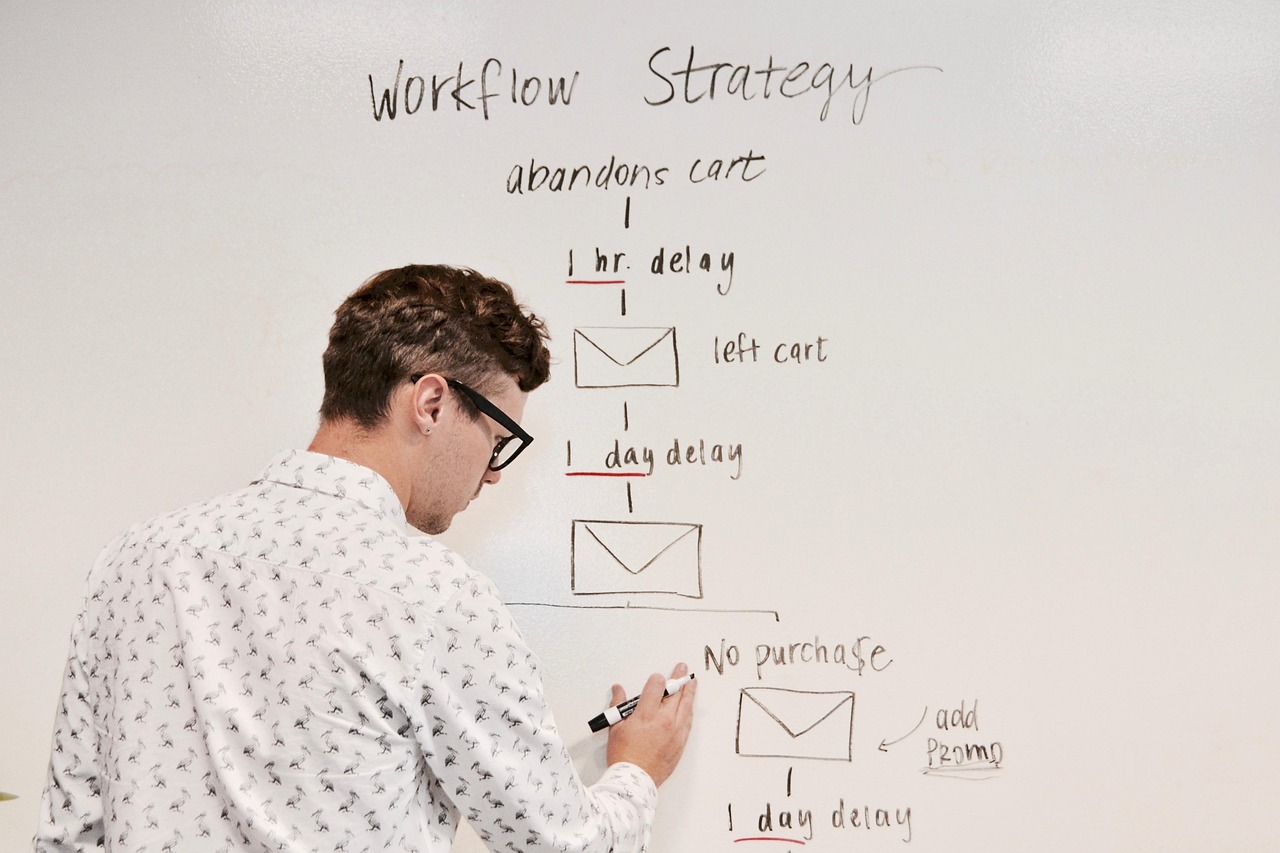
Look back at the five tactics and you'll see one pipeline repeated five times. A printed piece carries a code or short path. That leads to a protected form with double opt-in. The confirmed address starts a sequence, the sequence splits by behaviour, and the report shows human opens, clicks and bookings. The postcard, banner, workshop, magazine ad and sponsorship pack change. The pipeline doesn't. That's how offline touchpoints fit into an automated agency email pipeline. Each one is a new way into the same tracked system.
For an agency, that sameness is the business model. Print and events are one-off projects, billed once. The email engine that catches the leads runs every month. If it runs under your brand, the client pays you for it every month too. This is the shift we describe in turning strategy consulting into recurring software revenue. The advice and the campaign design open the door, and the platform keeps the relationship going.

How one agency packages it
Priya runs a four-person agency in Leeds that works with dental and physio practices. She used to bill a mailing as a project and then lose track of the client until the next quote. Now each client gets the platform under her agency's name as a monthly line item, and the mailings, workshops and sponsorships are add-ons that feed it. Across her first nine clients on the model, the January postcard runs brought 312 confirmed subscribers and 87 tracked bookings, all visible in each client's portal.
The postcard used to be the whole job. Now it's the reason the client logs into my portal every Monday, and that portal is what they renew.
SendTo is built for exactly this. You launch it under your own brand, set your own subscription prices for clients, and clients buy their own sending usage on top. The platform designs HTML emails from a campaign brief and the client's brand preset in seconds, and an AI reviewer checks subject lines, links, structure and basic compliance before anything goes out. Address verification, warmup on new sending domains and volume spread across several brand-matched domains all run without you building any of it. You sell the campaign results. You don't maintain servers.
Pick Each Client's Mix by Budget, Audience Habits and Tech Readiness
No client needs all five tactics. Choose with three questions. What can they spend before a single lead comes back? Where does their customer actually spend time offline? And can their team follow up on the leads once they arrive? A clinic with a front desk that ignores emails will waste a workshop list, however well you build the funnel.
The 5 C's of marketing strategy help here. They are company, customers, competitors, collaborators and context. Company and customers tell you the budget and the audience. Competitors tell you which channels are already crowded. Collaborators point you to co-marketing partners. Context covers timing, which matters a lot this week. Interest in email marketing peaks in January, November and December and is lowest in June, so a campaign planned now goes out while people are making new-year decisions.
| Tactic | Best fit client | Upfront cost | Lead volume | Lead quality |
|---|---|---|---|---|
| Direct mail | Local service with a clear postcode area | Medium | Medium | Medium to high |
| Event collateral | B2B firm already exhibiting | Medium to high | Medium | Medium |
| Local workshop | High-value advisory service | Low to medium | Low | Highest |
| Print advertising | Niche B2B supplier | High | Low to medium | High |
| Co-marketing sponsorship | Business with an obvious partner | Low, shared | Medium | High |
For a client with a small budget and no list, start with a workshop or a co-marketing pack. Both are cheap and both produce people you've met. For a client with a working list and room to test, put direct mail in the 20% tier of the 70/20/10 split and a trade magazine in the 10%. If the client can't confirm who answers enquiries within a day, sort that out before you spend anything on print. And make sure the nurture emails are built in HTML and text rather than as a single image, for the reasons in our piece on image based marketing emails.
When the best move is to refer the work
Some readers of this blog are freelancers, consultants or creators who plan offline campaigns but don't want to run a platform for clients. That's a sensible choice. If you know agencies that should be selling email under their own brand, SendTo's affiliate programme pays you 20% of the partner subscription each agency you refer pays SendTo, every month that agency pays it. You earn from the agency's platform fee, never from what that agency's own customers pay them. Attribution lasts 90 days from the first click, the first touch wins, and commission is paid monthly by PayPal.
So the plan for your next client is simple. Pick one offline tactic from the table and give it its own code and its own page. Route it into a sequence you can measure, and report the bookings by name. And if an agency you know would rather sell that whole engine than build it, send them our way.
Refer agencies to SendTo and earn 20% of every partner subscription they pay, each month they pay it.
Join the SendTo affiliate programme