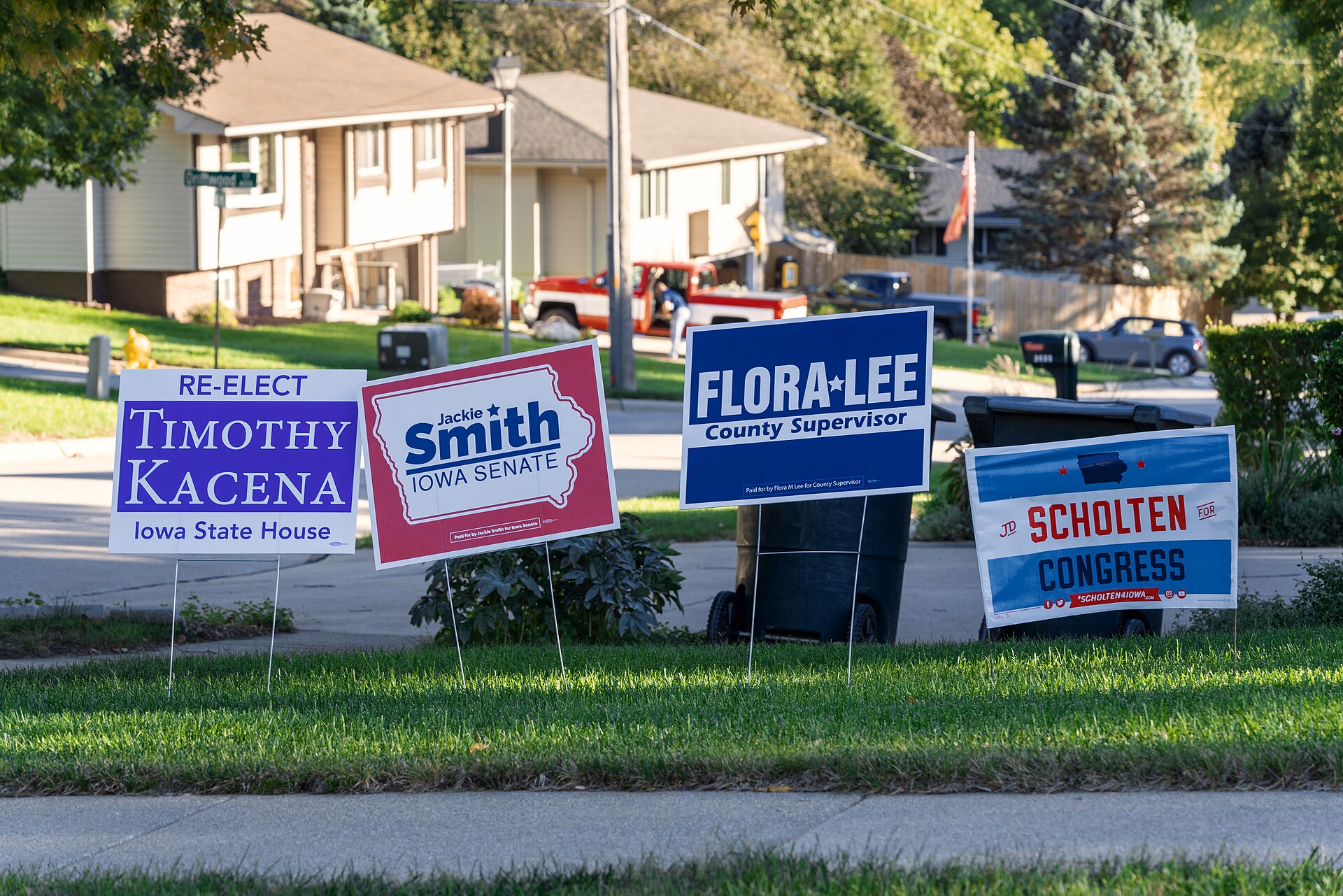
In the places the campaigns are fighting over, the last four weeks before Tuesday 5 November are the most crowded ad market of the year. If your clients sell in those places, their paid social and display costs are already climbing, and they'll keep climbing until polling day. That's what sits behind the questions about election ad costs small business owners are bringing to their agencies this month. The answer is narrower than the headlines make it sound.
For most small business clients, the election matters for four weeks and in a handful of places. The mistake is reacting to it everywhere. You don't need to rebuild a client's October plan. You need to find the share of the budget that's exposed and move that share into search, email and owned channels. Keep a small paid social presence running so the campaigns don't reset. Then bring paid media back about a week after polling day, well before Black Friday on 29 November.
It's Wednesday 9 October 2024, and early voting is under way in many states. This piece covers why costs are rising, a quick test for which clients are exposed, how to set a baseline, where the moved money should go, and why going fully dark on paid social costs more than it saves. After that come election week itself, a dated return plan and how to get email ready for a heavier November.
Political money is buying the same feeds your clients use, and October is when it peaks
Campaigns, party committees and outside groups bid in the same auctions as your clients, for the same adults. The difference is what they're buying. A bakery wants orders at a cost it can live with. A campaign wants a vote cast by a fixed date, and it will pay far more per thousand impressions than any local business would. The highest bidders set the auction price, so the cost per thousand impressions (CPM) goes up for everyone targeting those adults in those places.
Projections put 2024 political ad spending at record-breaking levels, and a large share of it lands in the closing stretch. Campaigns hold money back for the final weeks. Early voting stretches that window, pulling spend forward into mid-October because a ballot banked early is a ballot banked.
Supply doesn't stretch to match. There are only so many feed slots, connected TV breaks and local broadcast spots in a given metro on a given evening. When demand jumps and supply stays flat, prices rise, and some inventory sells out completely. Local broadcast and connected TV feel this first, because their inventory is the most fixed.
The squeeze is local and channel-specific, so most clients need a trim, not a rethink
The pressure is heaviest on paid social, programmatic display, connected TV and local broadcast in the swing states, which are Arizona, Georgia, Michigan, Nevada, North Carolina, Pennsylvania and Wisconsin. It also builds in metros with contested House or Senate races, wherever they are. Check the race map for each client's service area, because a tight congressional district can heat up a market in a state nobody calls a battleground.
Outside those places, election ad costs for a small business often barely move. A landscaper in Boise targeting homeowners within 20 miles isn't bidding against a presidential campaign. A consultancy targeting operations managers on a professional network is chasing an audience political buyers rarely prioritise. National campaigns do buy some broad inventory, so expect mild spillover everywhere, but mild is the word.
Run each client through three questions before you change anything.
- Where are the client's customers? If they sit in a swing state or a metro with a contested race, mark the client as geographically exposed.
- Which channels carry the budget? Paid social, display, connected TV and local broadcast are exposed. Search and email mostly aren't.
- Who is the audience? Broad consumer targeting of adults is exposed. Narrow B2B, trade or niche-interest audiences far less so.
A client needs action only where the answers overlap, meaning an exposed place, an exposed channel and a broad audience. A plumber in Phoenix running broad paid social to local homeowners hits all three. The same plumber's search campaign hits one. Trim the overlap and leave the rest alone.
Search feels it less, but it still feels it
Search auctions run on keywords, and political advertisers mostly bid on candidate names, issues and voting information. They aren't bidding on 'plumber near me' or 'birthday cake delivery'. Some overlap still happens, mainly on generic terms and occasionally on brand terms, and political search ads show up on news-heavy queries your client never targets anyway. Treat search as relatively stable, not untouched, and watch it with the same baseline as everything else.
Set a baseline from September before you move a single dollar
You can't call a rise if you don't know where you started. Pull September CPM, cost per click, cost per lead and cost per sale for every channel, split by region. September is the cleanest recent month to use, because political spending was still building rather than peaking. If a client ran a promotion in September, strip those days out so the baseline isn't flattered.
Then talk about cost per result, not CPM. A CPM up by a third tells you the auction is busier. It doesn't tell you whether the client is getting fewer enquiries for the money. Sometimes cost per lead barely moves, because the campaign's best conversions come from warm audiences political buyers never reach. A client doesn't pay for impressions. They pay for bookings, calls and orders, and that's the number the decision should rest on.
Agree a trigger with each client now. For example, cost per lead in an exposed region running more than 25% above the September baseline for two weeks in a row triggers the shift for that region. Two weeks stops you reacting to a single noisy day. A trigger per region stops you cutting spend in Ohio because Pennsylvania got expensive.
The baseline also answers the hardest question a client will ask, which is whether the rise comes from the election or from your own work. Compare exposed regions with unexposed ones. If costs rise in Atlanta but hold in Charlotte's quieter neighbours outside the race map, the auction is the cause. If costs rise everywhere at once, look at your own campaigns first, starting with creative fatigue, frequency and any recent edits.
Move the exposed budget into channels political campaigns can't bid you out of
Once a region trips the trigger, take the paid social and display share for that region and put it into four places. High-intent search terms, local search visibility, email to existing customers and past enquirers, and owned content. Each one either sits outside the political auction or barely overlaps with it.
High-intent search means tight terms with buying or booking intent, such as 'emergency boiler repair Pittsburgh' rather than 'heating'. Local search visibility is mostly time, not spend. A complete business profile, fresh photos, answered reviews and accurate hours all pay off for months. Our list of local SEO fixes service businesses can make in an afternoon is a good place to point that hour of work.
Email is the strongest home for the moved money. There's no auction. No campaign can bid its way into your client's own list. A send in election week costs the same as a send in September. Past customers and people who enquired and didn't book are the warmest audience the client has, and October is a good month to remind them the client exists before the holiday rush.
The trade-off is reach. Email only talks to people who already know the client. It won't find new customers on its own, and a list of 400 addresses can't absorb a paid social budget that was reaching 40,000 people. That's why part of the moved money should go into growing the list, not only into sending to it.
Spend the moved money on list growth, not only on sends
Put signup forms on the client's highest-traffic pages, usually the home page, the top service pages and the contact page. Build a hosted landing page with a real reason to join, such as early access to a holiday sale, a gift guide or a booking slot before the December rush. Then point a small search campaign at that page, so the moved budget buys subscribers instead of one-off clicks.
The timing works in the client's favour. Public interest in email marketing peaks in November and December, the same weeks the client will want to sell hardest. Every subscriber added in October is someone the client can reach through Black Friday, Cyber Monday and the run to Christmas without paying an auction price. By late November, a bigger list is worth more than one cheaper October campaign.
Don't go fully dark on paid social, because restarting costs you twice
Pausing everything until polling day looks tidy on a spreadsheet. It costs more than it saves. Paid social campaigns build up learning over weeks, meaning which people convert, which placements work and which times pay off. Switch a campaign off for a month and much of that learning goes stale. Switch it back on in mid-November and you pay for the learning period again, right as holiday advertisers start crowding the same auctions.
So you pay twice. Once in lost sales while the campaign is dark, and again in higher costs while it relearns. A maintenance budget avoids both. Keep the best-performing campaigns live at reduced spend, narrow their geography to exclude the hottest metros, and put most of what's left into retargeting.
Retargeting warm audiences usually holds its value through October, because political buyers don't have your client's site visitors or past customers in their audiences. Those people are cheaper to reach and more likely to buy. And because Google is keeping third-party cookies in Chrome, those website retargeting pools keep working the way they did.
Cut in steps, not one big drop. A budget slashed by 70% overnight looks like a new campaign to the platform's delivery system, and it triggers the same relearning you were trying to avoid. Two or three smaller reductions over a week keep the campaign stable.
Election week itself calls for quieter, warmer messages
From about Friday 1 November to Wednesday 6 November, your client's customers are watching the news. Ads still run and emails still land, but people aren't paying much attention and the mood is tense. Don't use this week for a big launch, a product reveal or a flash sale with a 48-hour clock. Save those for mid-November, when people are back to thinking about their own plans.
Keep the creative plain. Skip colour schemes built around voting, skip 'cast your vote for our new menu' puns, and cut anything a scrolling customer could read as taking a side. A client who sells to the whole town loses goodwill every time an ad gets read as political, whichever way it's read.
Is it a bad idea to send marketing email in election week? No, but send smaller. Aim at engaged segments, meaning people who clicked in the last 60 to 90 days, rather than the whole list. A calm, useful note works well here, such as holiday opening hours, a booking reminder or a short seasonal tip. Avoid election night, Tuesday 5 November, and the day after. Inboxes fill up with news alerts, and any opens you get will be from distracted readers. Thursday 7 November is a better day for anything that matters.
Come back about a week after 5 November, before Black Friday auctions heat up
Political buyers stop bidding once the polls close. Retail advertisers are already ramping up for the holidays. Between the two sits a short, quieter gap in mid-November. Use it to restart paid media, so your campaigns finish their learning period before Black Friday prices arrive.
| Dates | What to do |
|---|---|
| 9 to 31 October | Shift the exposed budget, grow the list, keep maintenance campaigns running |
| 1 to 6 November | Hold steady. No big launches, smaller sends to engaged segments |
| 7 to 8 November | Compare results with the September baseline and prepare saved creative edits |
| 11 to 12 November | Restore paid social and display to full budget in steps, then let them learn |
| 29 November | Black Friday |
| 2 December | Cyber Monday |
Will costs stay high into Black Friday? Yes, but for a different reason. The political premium falls away after polling day and a holiday premium builds in its place, peaking around 29 November and 2 December. That's why waiting until late November to restart is the expensive choice. A campaign restored on 11 November gets about two and a half weeks to settle before the busiest auctions of the year.
Restore in steps, the same way you cut. Raise spend over three or four days, bring back the hot metros you excluded, and make all the targeting and creative changes you saved up in one batch, so the campaign relearns once. Our guide to planning Q4 holiday marketing for small business clients covers what those holiday campaigns should carry.
Build in a week of slack in case results take days
Close races aren't always called on election night, and counting in tight states has taken days before. If that happens again, the news stays loud and some political advertising keeps running in the affected places. For clients in those states, add a one-week buffer. If counting is still going on by 11 November, restore budgets outside the affected states on schedule and keep the exposed regions at maintenance spend until your baseline trigger shows costs back near September levels.
Get the email programme ready for a heavier November load now
When you move budget into email, you move risk into email. A list that got two sends in September and gets six in November looks very different to mailbox providers, and the bulk sender rules Gmail and Yahoo brought in this year are strict about sudden changes. Sort these five things before volume rises.
- Authenticate every sending domain, with SPF, DKIM and DMARC set up and aligned with the from address.
- Keep spam complaints well under 0.3%, and put a one-click unsubscribe in every marketing email.
- Clean the list before volume rises. Remove hard bounces, role addresses and people who haven't opened in six months.
- Warm any new sending domain now, because a domain first used in late November has no sending history to fall back on.
- Raise frequency gradually, from one send a week to two before three, and never double it overnight.
Our Gmail and Yahoo bulk sender checklist goes through each rule in detail for agencies sending on behalf of clients.
Watch how you measure, too. Security scanners at business mail providers open emails automatically to check the links, and that inflates open rates. It can make a tired list look healthy right when you're judging whether October's shift worked. You need opens from real people, not machines.
SendTo handles these jobs for agencies that run it under their own brand. It verifies addresses before a campaign sends and applies automated warmup to new sending domains. It paces dispatch for each mailbox provider and domain, and spreads volume across several brand-matched sending domains, so no single domain carries the full November load. Reports exclude security scanner opens, so the client portal shows human opens and clicks. What it can't do is rescue a bought list or a send people don't want. Complaint rates still come down to who you mail and how often.
Turn the election squeeze into a conversation that keeps the retainer
Tell the client before the invoice does. If an October report shows CPM up 40% with no warning, it looks like the agency lost control. If you flagged the same number three weeks earlier and attached a plan, it looks like the agency saw it coming.
Send each exposed client a one-page note this week. Keep it to four parts.
- The September baseline for each channel and region.
- The planned shift, and the agreed trigger that starts it.
- The return date, 11 to 12 November, with the one-week buffer explained.
- What the client keeps, which is a bigger email list going into Black Friday.
How do you explain this without it sounding like an excuse? Show the comparison. Put exposed regions next to unexposed ones, and put list growth next to cost per lead. If a client ends October with 600 more subscribers than they had in September, they have something to show for the month, even though paid social cost more. That's proof of value at exactly the moment a cost report would otherwise look bad.
If you advise agencies as a consultant, freelancer or creator who reviews software, this is a good month to recommend a platform that makes email the safe home for moved budget. SendTo is the email marketing platform agencies sell under their own brand. Its affiliate programme pays you 20% of the partner subscription each agency you refer pays SendTo, every month that agency keeps paying. You never get a share of what the agency's own clients pay the agency. Attribution lasts 90 days from the first click, the first touch wins, and commission is paid monthly by PayPal.
Recommend SendTo to the agencies you advise, and earn 20% of their partner subscription every month they pay.
Join the SendTo affiliate programme