A client who asks "what's a map pack?" isn't after a dictionary entry. They want to know whether the line on their invoice pays for something real. That question sits under every word in this local SEO terms glossary. So each entry says three things. It says what the word means in plain English, how it sounds in a real conversation about a real trade, and what it can't do.
The last part earns the trust. Proximity can't be bought. Citations count for less than they used to. A review count tells a searcher less than how recently those reviews came in. An agency that says this out loud sounds like an adviser, and clients keep paying advisers.
If you report to small business clients every month, our earlier local SEO glossary for client reporting covers the words that show up in a report. This one covers the words clients bring to you, often straight after reading a headline. You get 18 terms in five themes, each with a line you can read aloud on a call.

A local SEO terms glossary earns trust when it says what each tactic can't do
It's Sunday 8 June 2025. Google's AI Mode reached every user in the US in late May. AI Overviews have sat above the results for a year. Owners are reading about both, and the questions are landing in your inbox. A plumber wants to know if AI has taken his customers. A salon owner wants to know why she's third on her phone and seventh in your report.
A local SEO terms glossary that only defines words leaves that owner where they started. They still don't know what to expect, what you control, or what they're paying for. Each entry below fixes that with a plain meaning, an example sentence an agency would really say, and one honest limit. If a term needs another term to make sense, that term has its own entry.
The 18 terms fall into five themes, alphabetised within each one. Read them in order and you'll follow the path a customer takes, from search to listing to website.
- Where a local business can appear in search
- Why a listing ranks where it does
- Business listings and the groundwork behind them
- Reviews and how they arrive
- The website that turns a searcher into a customer
Where a local business can appear in search is wider than the map
Owners picture one spot, the map. A local business can also turn up in an AI summary, in a longer list behind the map, and in searches that never name a town. Each place behaves differently, and each has its own ceiling.
AI Overviews
An AI Overview is a short summary Google writes and puts above the normal results, with links to the pages it drew from. It shows on many question-style searches, including local ones. Google's AI Mode, now open to everyone in the US, goes further and lets a searcher keep asking follow-up questions in a separate tab.
In use, an agency might say, "Your page on tap repairs was quoted when someone searched 'how much to fix a leaking tap', so that page is earning its keep even without a click."
What it can't do. No agency decides which source gets cited. Clear, specific pages raise the odds, and that's all.
Local finder
The local finder is the full list of map results that opens when a searcher taps "more places" under the map. It's ranked the same way as the map pack, just longer. Positions four, five and six live here.
In use, "You're sixth for 'boiler repair Bristol'. You're not in the top three on the main page, but anyone who opens the full list sees you near the top."
What it can't do. Few searchers scroll it, so sixth here is worth far less than third in the pack.
Map pack (local pack)
The map pack is the block of three business listings shown with a map when a search has local intent. It shows each business's rating, hours and a call button. If a client isn't in it, the usual reasons are distance from the searcher, a thin listing, or a competitor with more and newer reviews.
In use, "Someone searching 'florist Leeds' from the city centre sees you in the pack. From Headingley, you drop out, because two shops are closer."
What it can't do. It changes with where the searcher stands, so one screenshot proves very little. That's also why the client's phone and your report disagree.
"Near me" searches
A "near me" search is one where the location is implied rather than typed, such as "emergency electrician near me". Google fills in the location from the searcher's phone or computer. These searches tend to come from people ready to call today.
In use, "When someone types 'emergency electrician near me' at 10pm, Google checks where their phone is and shows the electricians closest to that spot."
What it can't do. Writing "near me" on your pages doesn't help. Location comes from the device, not your wording.
Why a listing ranks where it does comes down to factors only some of which an agency controls
Three things decide a map ranking, relevance, prominence and proximity. An agency can shape the first, build the second slowly, and do nothing at all about the third. Say that early, and you'll never have to explain a missed miracle.
Geogrid rank tracking
Geogrid tracking checks a listing's rank from a grid of points laid across a town, say 49 points a mile apart. The result is a coloured map showing where the business ranks well and where it vanishes. It answers "where am I visible?" far better than a single rank number.
In use, "You're first across the town centre, but three miles out towards the ring road you're not in the top 20."
What it can't do. It's a snapshot of rankings on one day, not a count of calls or customers.
Prominence
Prominence is how well known a business is, online and off. Google reads it from reviews, links from other sites, and mentions in local news, blogs and directories. Our piece on brand mentions vs backlinks covers which of those now carries more weight in AI answers.
In use, "The bakery that's been on the high street for 30 years outranks you even though you're closer, because the local paper, the school fete page and 400 reviewers all mention them."
What it can't do. It builds over months and years, and no single campaign buys it.
Proximity (distance)
Proximity is how close the business is to the person searching. It's one of the strongest factors in the map pack, and for many searches it's the strongest. A business without an address in a town will struggle to rank in that town's map results, whatever its agency does.
In use, "Your salon is on the edge of town, so people searching from the other side will see the two salons nearer to them first."
What it can't do. No tactic changes the address. Not reviews, not posts, not pages.
Relevance
Relevance is how closely a listing and its website match what someone searched for. Google reads the business categories, services, description, reviews and site content. A business that never mentions a service rarely shows for it.
In use, "You do wedding catering most weekends, but your listing and site only say 'cafe', so you don't appear when someone searches 'wedding caterer'."
What it can't do. Claiming services the business doesn't offer backfires, through confused customers and poor reviews.
Business listings are the groundwork clients assume is already done
A listing that exists isn't a listing that's finished. An owner sees their name on the map and assumes the job's done. Then you open the profile and find the wrong category, hours from 2022, no photos and a phone number that rings an old landline. This theme covers the gap between existing and complete.
Citations
A citation is any mention of a business's name, address and phone number on another site, such as a directory, a trade body or a local council page. Citations help Google confirm the business is real and where it says it is.
In use, "Your chamber of commerce listing still shows your old unit, so let's fix that one first, because it's the citation local people actually see."
What it can't do. Citations matter less than they did, and buying hundreds won't move rankings. Do you need to pay for them? A dozen accurate, relevant listings do the job, and you can claim nearly all of them free.
Google Business Profile
A Google Business Profile is the free listing that feeds the map pack, the local finder and Google Maps. It holds the name, category, hours, photos, services, reviews and posts. It's the single most important thing a local business owns in search.
In use, "The bank holiday is on Monday, so we'll add your holiday hours on Thursday and stop people turning up to a locked door."
What it can't do. Anyone can suggest edits to it, and Google sometimes accepts them, so it needs regular checks.
NAP consistency
NAP stands for name, address and phone. NAP consistency means those three details match across the profile, the website and every citation. When they clash, Google is less sure which details to trust, and so are customers.
In use, "You moved last year, and eight directories still list your old number, so customers are ringing a phone nobody answers."
What it can't do. Small format differences such as "St" against "Street" rarely matter. A mismatched phone number or an old address does.
Primary category
The primary category is the one main category chosen on a Google Business Profile. It carries more weight than any secondary category you add. The more specific it is, the better it matches the searches that bring paying work.
In use, "Let's switch you from 'Photographer' to 'Wedding photographer', because weddings are where 70% of your bookings come from."
What it can't do. You only get one, so pick the service that brings in the most revenue, not the one you enjoy most.
Service area business
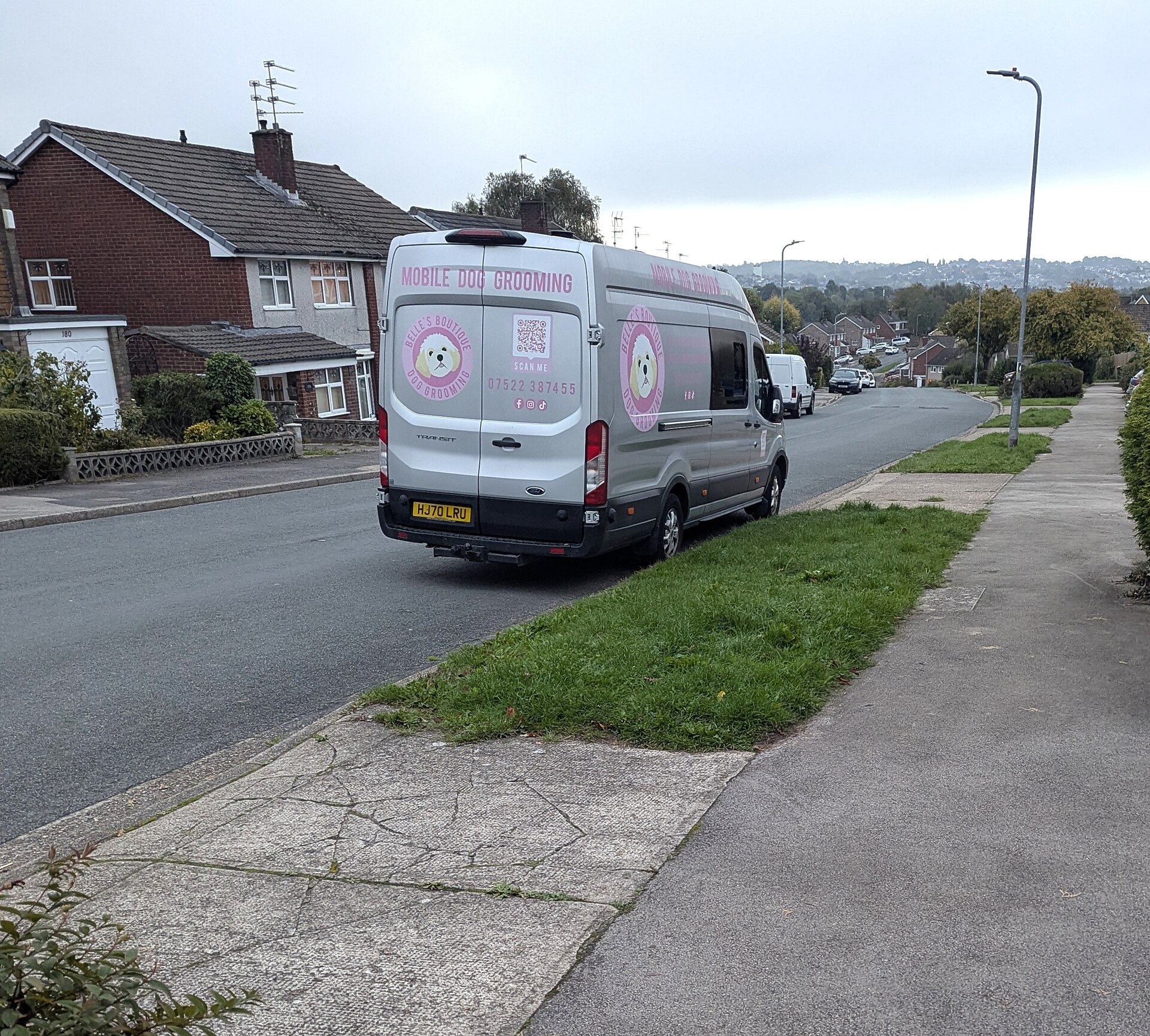
A service area business visits customers rather than having them visit, and it hides its address on its profile. Plumbers, cleaners, roofers and mobile groomers are typical. The profile lists the towns or postcodes served.
In use, "As a mobile dog groomer working from home, you'll hide your address and list the six villages you cover."
What it can't do. Setting a service area doesn't make the business rank across all of it. Google still measures distance from the hidden address.
Reviews count most when they keep arriving and nobody filters them
Reviews are where good intentions break rules. An owner who screens unhappy customers thinks they're protecting the business. They're breaking Google's review policy.
Review gating
Review gating means asking only happy customers for reviews, or screening customers before deciding who gets the review link. Google's policy forbids selectively asking for positive reviews. Some review tools still offer gating as a feature, so owners use it without knowing.
In use, "Your feedback form asks 'were you happy?' and sends anyone who clicks no to a private form, which counts as gating, so we're switching it off."
What it can't do. It can't be made compliant. The fix is simple. Ask every customer, the same way, every time.
Review velocity
Review velocity is how steadily new reviews arrive over time. Searchers check dates as closely as stars, and a recent review tells them the business is still trading and still good. A steady flow also keeps the profile active in Google's eyes.
In use, "Your rival has 40 reviews, all from 2021. You've got 25, but two arrive every month, and people notice the recent ones first."
What it can't do. A sudden burst looks unnatural, so a steady flow beats a campaign spike. How many do you need? Enough to match the top three in your area, then two to four new ones every month.
The website still decides whether a searcher becomes a customer
A listing gets the tap. The website gets the decision. A searcher who clicks through from the map pack wants to check prices, photos, the area covered and whether this business has done a job like theirs before. Three terms come up here. One of them is the trap owners fall into after they read that more pages means more rankings.
Doorway pages
Doorway pages are near-identical pages built only to rank for a list of towns, with nothing on them a customer can use. Google's spam policies name them directly. They often come from a cheap package that promises a page for every town you cover.
In use, "Your last agency built 30 pages that swap only the town name, so 'Roofer in Bath' and 'Roofer in Frome' say the same thing word for word. We'll merge them into five real pages."
What it can't do. Doorway pages don't win towns, and they risk being ignored or penalised, which can drag down the pages that were doing fine.
LocalBusiness schema
LocalBusiness schema is a short block of code that labels the business details for search engines, such as the name, address, phone, opening hours and area served. Customers never see it. It takes the guesswork out, so a search engine reads 9 to 5 as opening hours and not as random numbers.
In use, "We've marked up your opening hours on the contact page, so the times Google reads match the ones on your door."
What it can't do. It describes the business. It doesn't boost rank on its own.
Service area pages
A service area page is a real page for one town or district the business serves, filled with local proof. That means jobs done there, photos, reviews from customers there, the streets or postcodes covered and how quickly someone can get out. A doorway page swaps a word. A service area page swaps the evidence. Our guide on how to write local service pages that AI search tools can quote accurately shows the structure that gets these pages cited in AI Overviews.
In use, "Your Clifton page shows the three roofs you replaced on one street last spring, with before and after photos and reviews from two of those homeowners."
What it can't do. It won't put the business in the map pack for a town where it has no address, because proximity still rules the map. It reaches searchers in the ordinary results and in AI answers instead.

Three questions clients ask that no single term answers
Some questions cut across every theme above. These three come up on nearly every call, and each has a plain answer.
"How long until I see results?" It depends on which kind of work it is. Listing fixes show quickly. A corrected primary category, accurate hours and a fixed phone number across directories usually take effect within a few weeks. Prominence is slower. Steady reviews, local mentions and links build over six to twelve months. Tell the client which bucket each task sits in, and they'll judge the right things at the right time.
"Why did my ranking drop when I did nothing?" Usually for one of three reasons. The first is where the search came from. A check from the shop counter and a check from home three miles away give different results. The second is competitors, because a rival who gathered twenty new reviews this spring moved up while the client stood still. The third is Google itself, which updates its systems several times a year. A geogrid report over three months shows a trend that a single phone screenshot never can.
"Do I still need email if I rank well?" Yes, and the reason is simple. Ranking wins a stranger once. A customer who needs a plumber again next winter will search again, and the map might show them someone else that day. Email reaches them before they search.
Local search wins the first visit, and email wins the second
The map pack brings a first-time customer through the door. An email signup turns them into a repeat one. These are two separate jobs, and the handover between them is where small businesses lose money they already paid to win. A florist who ranks first for 'florist Leeds' still has to win the same customer again for Mother's Day, and an email in their inbox costs less than a click from a stranger.
Three places catch that handover well.
- A signup form on each service area page, offering something the visitor wants, such as seasonal reminders, a booking slot alert or a first-visit offer.
- A QR code at the counter or on the receipt, linking to a short landing page, so walk-in customers join in ten seconds.
- A review request sent by email to every customer after each job, the same message every time, which feeds review velocity without breaking any rules.
SendTo is the email marketing platform agencies run under their own brand. Agencies use it to send campaigns, build landing pages and embed bot-protected signup forms for their clients, with double opt-in available, all under the agency's name. A landing page works even for a client with no website, so the QR code at the counter has somewhere to go on day one. Reports leave out opens triggered by security scanners, so the client sees opens and clicks from real people.
Be honest about the limits here too. Email doesn't change map rankings. A newsletter won't move a salon from seventh to third. It works on the customers search already brought in, and it only works with consent, so every form needs clear wording about what people are signing up for. Our piece on choosing a channel mix for a small business sets out where search, email, social and print each do their part.
Consultants who explain local search clearly are the people agencies already listen to
If you write glossaries like this one, run a newsletter for agency owners or advise agencies as a freelance consultant, you already know what plain explanations earn you. An agency owner who trusts your account of proximity will trust your view on which tools to put in front of their clients. A software recommendation needs that same trust, and you can't buy it. You build it one honest answer at a time.
That's why SendTo runs an affiliate programme for people who explain things clearly. When an agency you refer signs up, you earn 20% of the partner subscription that agency pays SendTo, every month it pays. You never get a share of what that agency's own clients pay the agency, because those prices are the agency's to set. Attribution lasts 90 days from the first click, and the first touch wins. Commission is paid monthly, by PayPal.
Here's the one sentence to keep from this whole glossary. Tell clients what each tactic can't do, and they'll believe you about what it can. That works for map packs and reviews, and it works for software. If your readers are agencies selling marketing to small businesses, put SendTo in front of them the same way, with what it does and where it stops.
Sign up, get your affiliate link and start recommending SendTo to the agencies who already read your work.
Join the SendTo affiliate programme