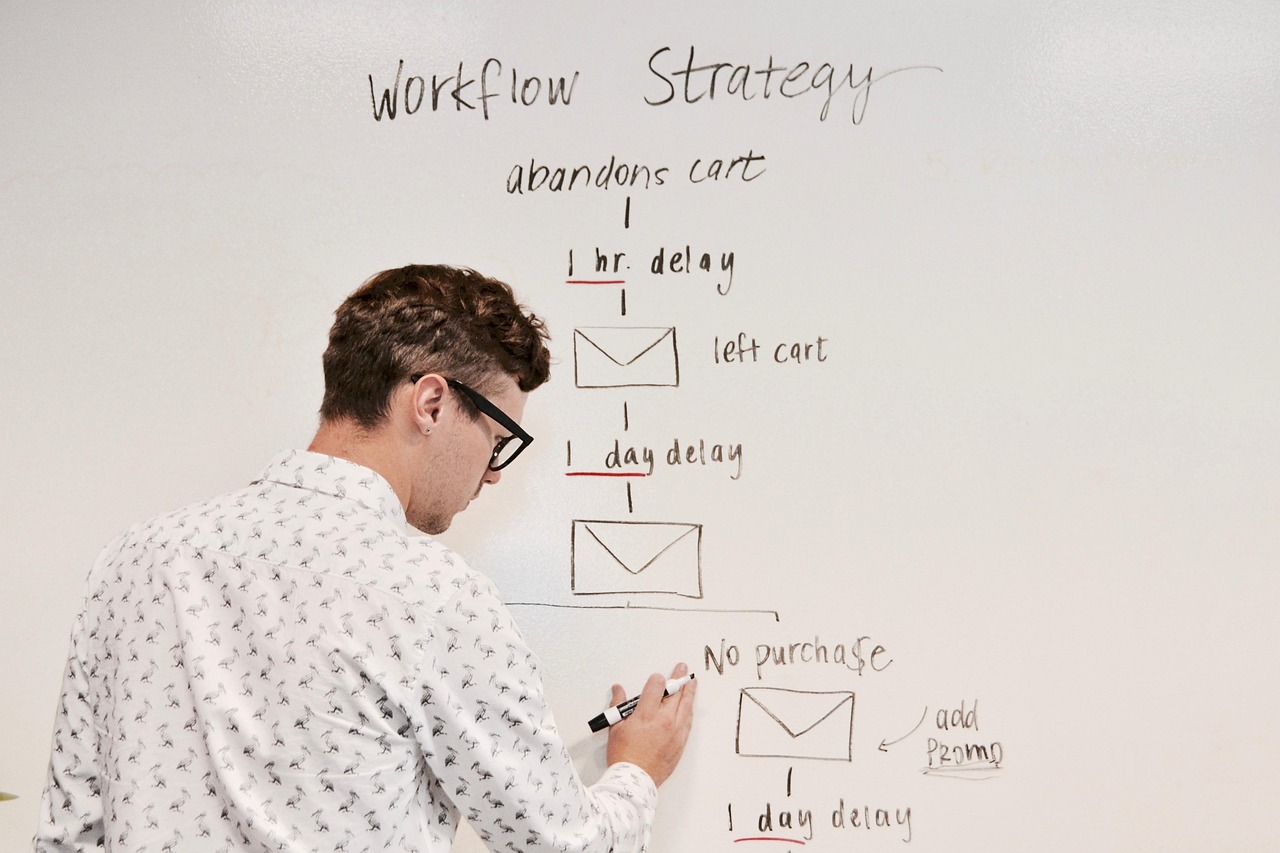
A florist in Harrogate opens a new social account because the shop across the road has one. The same week she cancels her ad in the parish magazine because print feels old. Neither choice came from a plan. That's how small business marketing strategy channels get picked far too often. Something looks popular this month, so it goes in. Something looks dated, so it comes out. Nobody asks what each one was there to do.
Here's the fix this article gives you. Every channel gets one job at one stage of the customer journey, and you judge it on that job alone. Search, local listings and print bring in strangers. Content and social win their trust. Email turns that trust into a first sale, then into repeat sales. Email is also the only channel on that list you own outright, which makes it the stage where the plan pays for itself. It's usually the one a small business builds last.
Below you'll get the four stages, the channels that fit each one, how to tell whether a channel is doing its job, and a week-long method for rebuilding your plan. It's written for the week of 5 July 2024, with Google's AI summaries, the new bulk sender rules and Euro 2024 all in play.

Choosing channels by trend is why most small business budgets leak
A trend tells you where other people are spending. It doesn't tell you what that spend does for your shop. When the florist added a social account, she had no idea whether it was meant to find new customers, remind old ones or sell flowers directly. So when it produced no orders in a month, she had no way to know whether it had failed or was doing something useful she wasn't measuring.
Give each channel a single job and that confusion goes. The parish magazine ad's job is to make strangers in three postcodes aware the shop exists. The social account's job is to keep the shop familiar to people who already know it. Neither is asked to close a sale. Each is judged on whether it did the one thing it was hired for.
This also answers how many channels a small team can run well. One channel per stage, four at most to start, run properly. Two people can keep four channels alive. They can't keep nine alive, and half-run channels cost money while proving nothing.
Before you can give a channel a job, you need the stages it works in. There are only four worth planning around.
Four journey stages are enough to plan a small business's marketing
Discovery is when someone who has never heard of you finds you. Consideration is when they compare you with other options and decide whether you're right for them. Conversion is the first purchase or booking. Repeat buying is everything after, the second order, the annual service, the referral.
Follow one customer to see it work. Priya's boiler in Leeds starts knocking. She searches "boiler repair near me" and finds Dan, a local plumber, in the map listings. That's discovery. She reads his service page, checks his price range and looks at photos of recent jobs on his social page. That's consideration. She books through his website form, which also signs her up for service reminders. That's conversion. Eleven months later, a reminder email arrives about her annual boiler service and she books again. That's repeat buying, and it cost Dan almost nothing.
Bigger funnel models add stages like awareness, interest, intent, evaluation, purchase, loyalty and advocacy. They come from companies with a team for each stage. A plumber or a cafe owner will never staff seven stages or measure the gaps between them. Four stages map onto four questions you can answer. Did strangers find me? Did they trust me? Did they buy? Did they come back?
Every customer starts the same way, as a stranger. So the first stage to plan is where strangers actually look.
Discovery belongs to search, local listings and print because that is where strangers look
Discovery channels reach people with no idea you exist. Their whole job is to put your name in front of the right stranger at the right moment. A discovery channel fails the moment it tries to close the sale. A leaflet crammed with prices, terms and five offers gets binned. A leaflet with one clear reason to visit and one place to go gets kept on the fridge.
Search still finds buyers, but AI summaries are changing which clicks arrive
Search remains the strongest discovery channel for local services, because the person searching already wants what you sell. What's changing is the results page. Google's AI Overviews rollout began in the US in May 2024, putting an AI-written summary above the usual links for many queries. Broad information searches like "how often should a boiler be serviced" are the ones most likely to be answered on the page, with fewer clicks through.
Does that mean SEO no longer pays? No. Local, ready-to-buy searches still lead to map listings and service pages, and those are where your bookings come from. Protect them. Keep your business profile complete, with correct hours, services, photos and fresh reviews. Make every service page say plainly what you do, where you do it and roughly what it costs. Those pages are what a buyer clicks after the summary has answered their general question.
Print, local radio and events still work when they point somewhere measurable
Print and radio don't fail because they're old. They fail when nobody can tell whether they worked. Fix that by giving every offline piece one trackable destination. A QR code on a flyer that opens a dedicated landing page. A short web address read out on a radio spot, such as yoursalon.co.uk/radio. A tablet signup at a fair stall that adds visitors to your list with their consent. Each one turns an impression you can't see into a visit or a signup you can count.
Direct mail people talk about a 40-40-20 rule. Forty per cent of the result comes from the list you send to, forty from the offer, twenty from the design. It's a useful check before you spend on print. A beautiful leaflet sent to the wrong streets with a weak offer still loses.
Local moments count too. Euro 2024 is running this month, with England's quarter-final against Switzerland on Saturday. A pub chalkboard, a cafe window offering a match-day breakfast, or a shop flyer for a final-night bundle all bring in people who wouldn't otherwise walk through the door. Give each one a QR code to a signup and the match crowd becomes a list.
Once a stranger knows your name, they start comparing. That's where the next set of channels earns its keep.
Consideration is won by content and social that answer the questions buyers already ask
At this stage the buyer knows you exist and is weighing you against two or three others. They aren't looking to be sold to. They want three kinds of answer. What does this roughly cost? How does it work, from first call to finished job? Is this right for someone like me? A salon that answers "how long does a balayage take and what does it cost" on its own site wins the booking over a salon that makes you phone to find out.
FAQ pages and service pages do the quiet work of persuasion
A good FAQ page settles doubts before they become reasons to leave. Put a price range on it, even a wide one. Describe the process in steps. Say who the service isn't for, because that makes the rest believable. Then avoid the common FAQ page mistakes, such as hiding answers behind accordions that never load, writing vague replies, or burying the question in sales copy.
There's a second payoff. Clear question-and-answer blocks are exactly what AI summaries and chatbot answers pull from. A plumber whose page says "We repair combi boilers across north Leeds, usually within 48 hours" gives an answer engine a sentence it can quote. A page full of slogans gives it nothing.
Social media builds familiarity, and familiarity is all it should be asked for
Is social worth it for a local business? Yes, if you ask it for the right thing. Social keeps you familiar to people who've already found you, so when they're ready to buy, your name comes to mind first. It's a weak closer. Judge it on whether people who follow you later visit your site and book, not on sales from posts.
That means a steady calendar beats chasing every trend. Three posts a week showing real work, real staff and real answers do more than a burst of viral attempts followed by silence. And don't let your plan depend on one platform you rent. The TikTok divestment law signed in April 2024 gives its owner a deadline to sell or face a US ban. Whatever happens next, it's a clear reminder that a platform can change its rules, its reach or its future without asking you.
Trust earned on rented platforms needs somewhere to go. The next stage moves it onto ground you own.
Email converts because it is the one channel a small business owns
Is email still worth it in 2024? It's the only channel where you hold the list, set the timing and reach the person without paying a platform for each view. That's why every earlier stage should feed a signup. The flyer QR code leads to a first-order offer. The FAQ page offers a short guide, such as "What to check before booking a boiler service". The booking form includes a reminder opt-in. When should you start building the list? The day you take your first customer, not after the business feels big enough.
Collect signups the right way. Under UK and EU GDPR, consent has to be freely given, specific and clear. No pre-ticked boxes. Say what people will get and how often, and keep a record of when and how each person signed up. Double opt-in, where the subscriber confirms by clicking a link in their first email, is optional but gives you cleaner proof of consent and fewer fake addresses. The trade-off is that some people never click the confirmation, so your list grows more slowly.
Forms also need protecting. Bots fill unguarded forms with junk addresses, and sending to them damages your reputation with mailbox providers. SendTo's signup forms with bot protection and double opt-in can be embedded on your site or hosted on a landing page, so a print QR code has somewhere to land even before your website is finished.
Sending properly matters more since February 2024, when Gmail and Yahoo brought in rules for bulk senders. Senders now need authenticated domains, one-click unsubscribe and low spam complaint rates, or their mail gets filtered or rejected. SendTo verifies addresses before sending, warms up new sending domains automatically, paces sends for each mailbox provider and spreads volume across several brand-matched domains, so no single domain carries the whole load.
Repeat buying is where email pays for the whole plan
Dan didn't pay for a search click or a leaflet to win Priya back. He sent one reminder email to someone who already trusted him. That's why the repeat stage carries the plan. Every pound you spent on discovery and consideration pays you again each time a past customer buys, and email reaches them when you choose, without a platform charging for the view.
The trick is to stop sending everyone the same message. Sort people by what they did with your last campaign. SendTo builds segments from past sends in three ways, and each one tells you what to send next.
- Clicked: these people are interested. Send the next step, such as a booking link, a follow-up offer or the product they looked at.
- Opened but didn't click: curious but not convinced. Try a different angle, like a price range, a customer photo or a simpler offer.
- Never opened: try one fresh subject line. If that gets nothing, move them to a win-back message.
A win-back is one short, honest email. A cafe might send lapsed regulars a free coffee with their next breakfast, plus a clear link to stop hearing from the cafe. Keep the people who reply. Remove the people who don't. Mailbox providers watch how many people open your mail, so a smaller list that reads your emails beats a big one that ignores them.
Timing matters too. Public interest in email marketing peaks in January, November and December, and it hits its lowest point in June. We've just come out of that June dip, so start planning Q4 now. A florist's Christmas wreath workshop, a salon's party-season bookings or a plumber's pre-winter boiler check all need offers, segments and send dates. Fix them in July and October won't be a scramble.
There's one more reason to send to engaged segments. Apple announced Mail categories for iOS 18 in June 2024, and they'll sort promotional email into its own section on iPhones. An email that reads like a note from a business you know, and actually gets opened, holds up better there than a run of discount banners.
Repeat email has limits, though. It won't rescue a poor first experience, and it does little for one-off purchases. A wedding florist rarely sells to the same couple twice. Her repeat stage is anniversaries and referrals, so judge it on those and not on second orders.
That's all four stages. Here they are side by side.
The small business marketing strategy channels that fit each stage, in one table
Print this table or pin it next to your till. Each row gives a stage one job, the channels that do it, one number to watch and the mistake that wastes money there.
| Stage | The job | Best-fit channels | One metric to watch | Common mistake |
|---|---|---|---|---|
| Discovery | Put your name in front of strangers who need you | Search, map listings, print, local radio, events | New visitors and calls from new numbers | Trying to close the sale in the ad |
| Consideration | Answer buyers' questions and earn trust | Service pages, FAQ pages, social posts, reviews | Return visits and time on key pages | Judging social on direct sales |
| Conversion | Turn trust into a signup and a first purchase | Signup forms, landing pages, booking forms, welcome emails | Signups and first purchases | A form with no reason to sign up |
| Repeat | Bring past customers back | Email campaigns, behaviour segments, reminders, win-backs | Repeat orders and revenue per subscriber | Sending everyone the same blast |
Which stage do you fund first if money is tight? If you're new, fund discovery, with one channel done well, and put an email signup on it from the first day. If you're established, fund repeat first. You already have customers sitting in your booking diary or till records, and reaching them again costs far less than finding strangers. Once email is running, shift spare budget back towards finding new customers.
Measure each channel against its own stage, not against total sales
A channel can only fail at the job you gave it. Judge discovery by new visitors, calls from new numbers and actions on your map listing. Judge consideration by return visits and time spent on your service and FAQ pages. Judge conversion by signups and first purchases. Judge repeat buying by repeat orders and revenue per subscriber.
So how do you know which channel produced a sale? Not by asking which one came last. Take the Harrogate florist. A woman sees her parish magazine ad, follows the shop on social, signs up through the website and buys a bouquet from an email. A last-click report gives email all the credit and the magazine none. Cut the magazine on that basis and, three months later, the list stops growing and nobody knows why. You'll hear a 3-3-3 rule quoted in different versions, usually that a buyer needs several touches across several channels before acting. Whichever version you use, the sale comes from the whole chain, not just the final link.
Two cheap fixes show you the chain. Add a "How did you first hear about us?" question to your signup and booking forms. Give each offline piece its own QR code or short web address, so the magazine, the radio spot and the market stall each show up separately.

Build the plan in a week by auditing, mapping, cutting and connecting
You don't need a quarter-long project. Set aside an hour a day for five working days and work through these steps in order.
- Day 1, audit: list every channel you currently pay for or post on, with what it costs in money and hours each month.
- Day 2, map: give each channel one stage from the table. If you can't name its job, write "none".
- Day 3, cut: stop or pause every channel marked "none". Put the freed money and hours into the stage with the weakest number.
- Day 4, connect: make sure each stage hands people to the next. Print points to a signup form, social posts point to your FAQ page, and every form triggers a welcome email.
- Day 5, review date: put a 90-day review in the diary, with the one metric for each stage written next to it.
Why 90 days? Discovery and consideration take time to show up in signups. A month is too short to judge a print run or a posting calendar fairly. A season is enough.
- Every channel has one written job
- No stage is left empty
- Every offline piece has its own QR code or short web address
- Every form asks how people first heard of you
- Every signup gets a welcome email the same day
- A 90-day review is booked
Agencies and affiliates can sell the journey map, and SendTo runs the stage clients own
If you run an agency, this week-long audit is a strategy session you can charge for. A salon owner leaves it with a channel map, a cut list and one number per stage. The next question is who runs the email stages, and that's monthly work clients will keep paying for.
SendTo lets you run conversion and repeat buying under your own brand. It designs HTML emails from a campaign brief and brand presets in seconds, so you can show a finished campaign in the first few minutes of a client call. A built-in AI reviewer checks subject lines, structure, language, links, alignment and basic compliance before anything goes out. Clients see real human opens, clicks and bookings in a portal carrying your name. You set your own prices, and clients buy their usage on top of the monthly fee you charge. For what the platform costs you, see the pricing page.
Be clear with clients about what it doesn't cover. SendTo doesn't run social posts, search ads or print. Discovery and consideration stay with you or other tools. It's built for agencies that want sending and deliverability handled for them, not for people who want to adjust every setting by hand.
If you're an affiliate or creator who recommends software, here's how the programme works. You earn 20% of the partner subscription each agency you refer pays SendTo, every month that agency keeps paying. You never earn a share of what that agency's own clients pay the agency. Attribution lasts 90 days from the first click, and the first touch wins. Commission is paid monthly by PayPal.
Start with your own map this week. Give every channel one job, connect each stage to email, and book the 90-day review. If you know agencies that would sell this plan to their clients, refer them to us.
Refer agencies to SendTo and earn 20% of their partner subscription every month they pay.
Join the SendTo affiliate programme