A season's kit sponsorship for a junior football team puts your client's name on fifteen small shirts. Whether it also gets them 40 email addresses from parents who live four miles away depends on one conversation, and it has to happen before anyone pays. This article gives you six local sponsorship ideas small business owners, and the agencies working for them, can set up this autumn. Each one is judged on one measure, the number of consented email contacts it puts on a list the business owns.
A logo on a banner buys goodwill, and the goodwill is gone by Monday. A QR code that leads to a signup form, a prize draw with its own marketing consent box, or a follow-up offer sent to people who opted in buys a list. The business can keep mailing that list into November and December, when public interest in email marketing and in buying is at its highest.
It's the week of 24 August 2024. Junior football, netball and rugby seasons start within the next fortnight. Town councils and traders' groups are filling their Halloween trail, Christmas lights and winter market sponsor slots right now. If you plan marketing for service business clients, this is the week to have these conversations.

Every sponsorship worth paying for has its signup agreed before the cheque
One rule runs through all six ideas. Before your client pays a penny, three things get agreed in writing. The agreement can be a short email reply from the club secretary or the PTA chair. It still counts, and it stops the "oh, we didn't think you'd want that" conversation in October.
- Step 1: Where the QR code goes. Name the exact spot, such as the banner by the dugout, the back page of the programme, the answer sheet or the fixtures email.
- Step 2: Who owns the entries. The business collects names and emails through its own form, so the business holds the data and answers for it.
- Step 3: Whether the organiser will send one sponsored email to its own list. The email carries your client's offer and link, and the organiser sends it, not you.
That third point answers a question clients always ask. Will the club or school hand over its mailing list? It shouldn't, and you shouldn't ask. Those parents gave their address to the club for fixture changes, not to a plumber, and using it would put both of you on the wrong side of GDPR. One sponsored email sent by the club does the same job properly. Everyone who clicks through and signs up has given consent to your client directly.
A raffle entry is not permission to send marketing
Someone who enters a prize draw has agreed to be contacted about the draw. That's all. To email them offers afterwards, the form needs a separate box, unticked by default, that says plainly what they'll get, for example "Send me seasonal offers from Hartley Heating, about once a month." Double opt-in adds a confirmation email before the address joins the list. That costs you a few signups and gives you proof of consent you can show anyone who asks. Our review of SendTo signup forms for small business lead capture covers how the bot protection and double opt-in settings behave on a real form.
1. Youth sports kit sponsorship reaches parents who live inside the service area
Parents of under-11s are a service business's ideal audience. They own or rent homes within a few miles of the pitch, and they stand on the same touchline every Saturday from September to April. Sponsoring a junior football, netball or rugby team means your client's name goes on the shirts or on a touchline banner for the season, usually alongside a mention in the club's fixtures email.
The shirt is the weak part of the deal. A logo on a child's chest is too small and moves too fast for anyone to scan, so it's pure goodwill. The banner and the fixtures email do the capture work. Put a large QR code on the banner at adult eye level near where parents gather with their coffee, and agree a single line in the club's weekly email with the same link.
Dan, a heating engineer, sponsored an under-11s team last September. His banner and the fixtures email led to a "team families" page offering a free boiler check before the first cold snap, with the marketing box unticked. By the end of October, 41 families had signed up and 9 had booked the check. He mailed the other 32 through the winter with a reminder about servicing and a radiator bleeding guide.
The limit is reach. One team has around 15 families, so 40 signups is close to the ceiling. Ask whether the sponsorship covers the whole club's fixtures email, not just your team's WhatsApp group. Across six age groups the same banner and email line reach around 90 households for the same money.
2. A donated raffle prize at the school fair works only when entry needs an email address
A donated prize costs your client a few hours of their time and nothing else. A deep clean, a garden tidy or a full car valet donated to a PTA fair or a charity raffle is easy to give, and the PTA is grateful for it. The trouble is the paper ticket. A folded raffle ticket with a phone number on it gives your client exactly one contact, the winner.
Swap the paper for a form. Ask the PTA whether your prize can run as a free-entry prize draw alongside their paid raffle, with entry on a tablet at the stall or through a QR code on a printed card. The form asks for name and email, then has the separate unticked box for future offers. A free draw is also simpler for the school than adding your prize to a licensed raffle, so it's an easy yes.
Sophie, a domestic cleaner, gave a deep clean to her local primary school's summer fete in July. Her QR card brought in 112 entries, and 74 of those ticked the offers box. One parent won the clean. The other 73 opted-in entrants got an email two days later that said "You didn't win this time, but here's 15% off a first deep clean booked before 30 September." Six took her up on it.
That's the point of this one. The winner is one person. Everyone who entered and didn't win is the real prize, and the consolation offer is how you turn them into customers. Plan that email before the fair, not after.
3. A charity fun run water station earns a list when the finisher photos are emailed
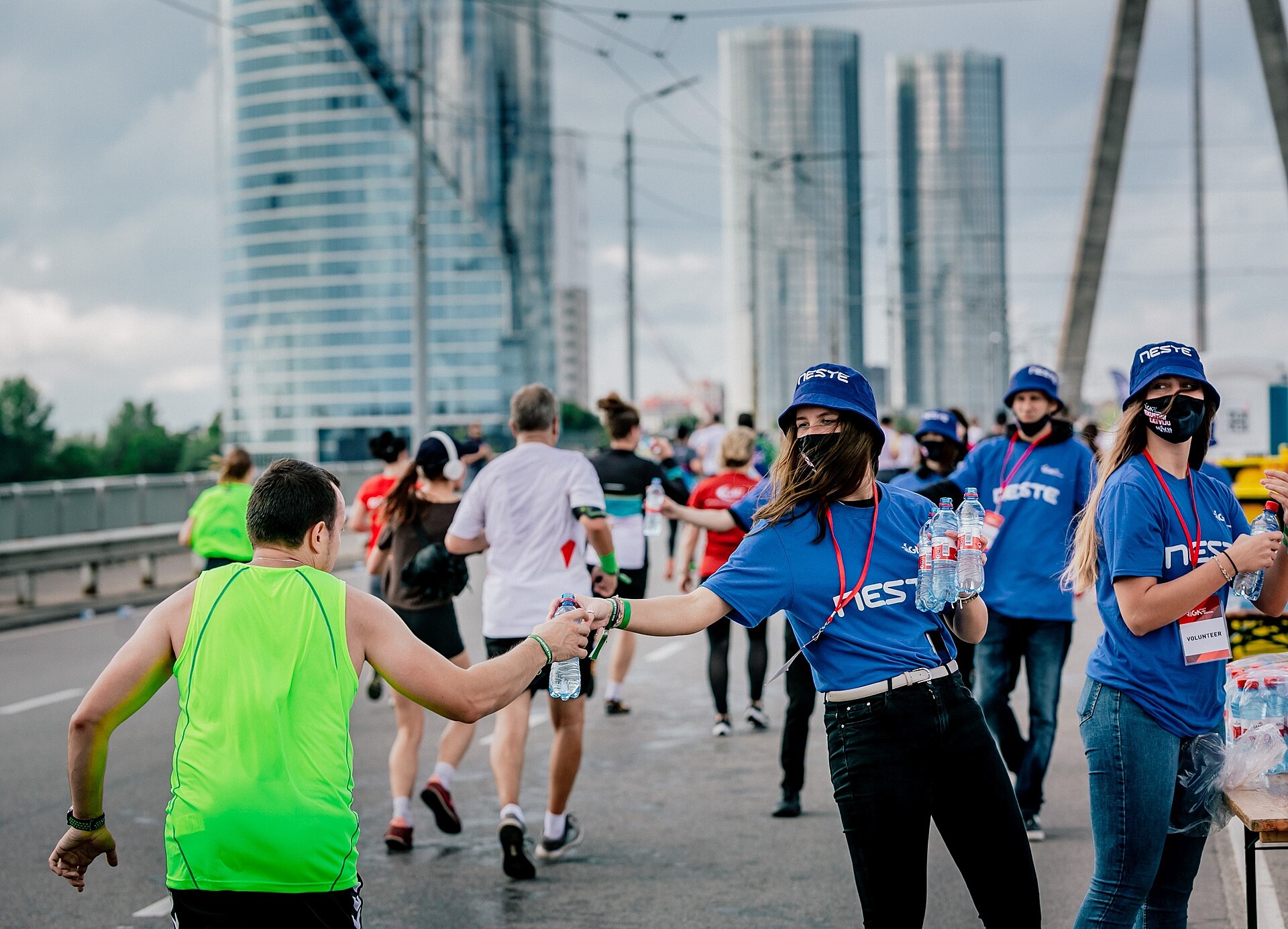
Runners want two things at the finish line, their time and a photo of themselves looking better than they felt. Sponsoring a water station, a kilometre marker or the finishers' area at a local 5k or charity run gets your client's name in front of hundreds of people. Paying for the finish line photographer gets them the email addresses.
Here's the setup. Your client pays a photographer to shoot every finisher, then hosts the gallery behind a short form asking for name, email and bib number, with the unticked offers box underneath. Every download is a contact. The organiser announces at the finish and in the results email that photos are free from the sponsor's page, which is the sponsored email from Step 3 doing its job.
Tom, a sports physio, paid £250 for a photographer at a 600-runner charity 5k in May. 230 runners downloaded their photos and 140 ticked the offers box. His follow-up offered a free 20-minute post-race assessment, and the list now gets his monthly email about niggles, stretching and race season.
This one suits physios, sports massage therapists, gyms, personal trainers and running shops. A boiler engineer gets little from it, because a finish line full of runners isn't a group of people thinking about their heating. Two caveats. Check that the organiser hasn't already sold photo rights to someone else, and get the gallery live within 48 hours, because interest in race photos drops fast after the weekend.
4. Hosting a free community workshop turns the sponsor into the expert people book
Nobody books a 45-minute talk on spotting damp unless they've got damp. That self-selection is why a workshop beats a banner. Your client sponsors and runs a short free session at the library, the community hall or a garden centre on a subject tied to their trade. Good topics are winter-proofing your home, spotting damp before it spreads, getting your self-assessment tax return in before January, or choosing a child's first bike. Registration is the signup, and every person who registers has the exact problem your client fixes.
The capture runs in three emails. A hosted landing page with a registration form takes the bookings, with the offers box kept separate from the booking itself. A reminder goes out the day before, which keeps no-shows down. Then a follow-up the next morning carries the slides, a short checklist and one offer, such as a discounted survey booked before the end of November. In SendTo, the landing page, the bot-protected form and all three emails sit in one place, under the agency's own brand if you're running this for a client.
Marcus, a damp-proofing specialist, ran "Spotting damp before winter" at his town library last October. 38 people registered, 27 turned up, and 31 ticked the offers box across the registrations. Eleven booked a survey before Christmas. The library let him leave cards on the table but asked him to keep the talk itself free of sales pitches, which helped. People trusted the advice because it wasn't a pitch.
The trade-off is effort. A workshop needs a date, a room, a set of slides and a client who can talk for 40 minutes without reading from notes. If your client hates public speaking, pick a different idea from this list. A nervous, mumbled talk does more harm than no talk at all.
5. Autumn and Christmas trail sponsorships pay off if you start planning in August
Town councils and traders' groups sell stops on their Halloween trails, Christmas lights trails and winter markets to local businesses. Your client pays for a numbered stop on the trail map, a window display on the route or a stall for the market weekend. In return they get families walking past their name over several evenings in October and December.
Timing is what makes this one worth the money. Public interest in email marketing, and in buying, peaks in November, December and January and is lowest in June. A list built on a Halloween trail is only a few days old when the busiest sending window opens. Contacts gathered at a June fete have had five months to forget who you are. These have had five days.
The capture works through a stamp card or the printed trail map. Children collect a stamp or answer a question at each stop. The finished card enters a family prize draw, and entry happens through a QR code printed on the map. The form asks for name, email and postcode, with the separate unticked box for offers underneath. Ask the organiser to give your client's stop the trail question, so their name sits on the form families fill in.
August matters because the map is print. Organisers send artwork to the printer in September or early October, and a QR code that isn't on the map by then won't be on it at all. Agree its position and size in writing this week. If your client also sends printed post in the run-up to Christmas, line the two up with a Q4 direct mail schedule so the trail list and the postcard drop don't land in the same week.
6. Sponsoring a pub quiz round wins regulars when the answers arrive by email
The same 60 local adults sit in the same pub every Thursday night. Sponsoring one round of a weekly pub or club quiz, or putting up the prize, costs little and puts your client's name in front of those people every week, not just once. The quizmaster reads it out, and the round carries the sponsor's name on the answer sheet.
The capture is the answers. Teams want to know what they got wrong. Print a QR code on the answer sheet that says the sponsored round's answers and next week's bonus question arrive by email the next morning. Teams sign up through the form, each person with their own address and the unticked offers box. The Friday email carries the answers, the bonus question and one line from the business at the bottom.
Priya, an independent accountant, sponsored the money round at her local Thursday quiz from October to January last season, with a bar tab as the prize. 58 quizzers signed up across 22 teams, and 41 ticked the offers box. Her line at the bottom of each email was a reminder about the 31 January self-assessment deadline. Seven of them booked her to do their returns before it.
The ceiling is low. One pub gives you a few dozen contacts, not hundreds. It also depends on the landlord and the quizmaster staying keen for months, so agree the season length up front. The upside is repeated contact with people who already know your client's name before they open the email.
Booth visitors become subscribers only when the follow-up goes out within days
Every one of the six ideas fails the same way. The entries sit in a spreadsheet on someone's laptop for three weeks. By then the parent, runner or quizzer has forgotten the stall, and your first email looks like spam to them.
Get the entries into your email platform the same week. Online form entries land in the list directly. Paper or tablet entries come out as spreadsheets with odd column names like "Email addr" and "Offers Y/N". In SendTo, the import maps those columns for you, picks up again if the upload drops halfway, and applies platform-wide suppression, so duplicates and anyone who unsubscribed in the past are kept off the list. Our review of importing event spreadsheets shows how that behaves on messy files. Import only the rows where the offers box was ticked.
Send the welcome within 48 hours. It should say where you met ("thanks for running the Riverside 5k"), deliver the thing you promised, whether that's the photo, the slides or the quiz answers, and make one offer with a date on it. Nothing else. Then tag each contact by event, so the trail families hear about Christmas and the fun run list hears about race season. Our guide on turning trade show booth visitors into consented subscribers covers the same sequence for bigger events.
Measure what humans did. Security scanners at workplaces and some mail providers open emails automatically, which inflates open rates. SendTo's reports leave scanner opens out and show real human opens, clicks and bookings in the client portal, so you tell your client how many people booked, not how many machines looked.
Choose the sponsorship whose audience matches the client's service radius and season
Picking between these local sponsorship ideas small business owners can afford comes down to three checks. Do the attendees live inside the service area? Is the capture agreed in writing? Will the follow-up offer land before the client's busy season?
| Idea | Typical audience | Capture method | Best-fit trades | Best season | Effort |
|---|---|---|---|---|---|
| Youth sports kit | Local parents, weekly | QR on banner, fixtures email | Heating, plumbing, cleaning | September to April | Low |
| School fair prize draw | Parents, one day | Free draw entry form | Cleaners, gardeners, valeters | Summer and Christmas fairs | Low |
| Fun run photos | Runners, one day | Photo gallery signup | Physios, gyms, trainers | Spring and autumn | Medium |
| Community workshop | People with the exact problem | Registration page | Damp, accountants, builders | October to January | High |
| Halloween or Christmas trail | Families, several evenings | Trail map draw | Most home services | October to December | Medium |
| Pub quiz round | Same adults, weekly | Answers by email | Accountants, solicitors, trades | Autumn and winter | Low |
A heating engineer wants the sports kit or the trail, because both feed a list before the first cold snap. An accountant wants the workshop or the quiz, timed for the January deadline. A physio wants the fun run. If an idea's best season doesn't come before your client's busy period, skip it, however visible the logo would be.
Pick one idea for each client this week, get the three terms agreed by email, and have the welcome message written before the event day. Then send it within 48 hours.
If you know agencies that would run sponsorship follow-ups like these for their clients, refer them to SendTo. You earn 20% of the partner subscription each agency pays us, every month they pay it, never a share of what their clients pay them. Attribution lasts 90 days from the first click and commission is paid monthly by PayPal. Plan costs are on the pricing page.
Join the SendTo affiliate programme